
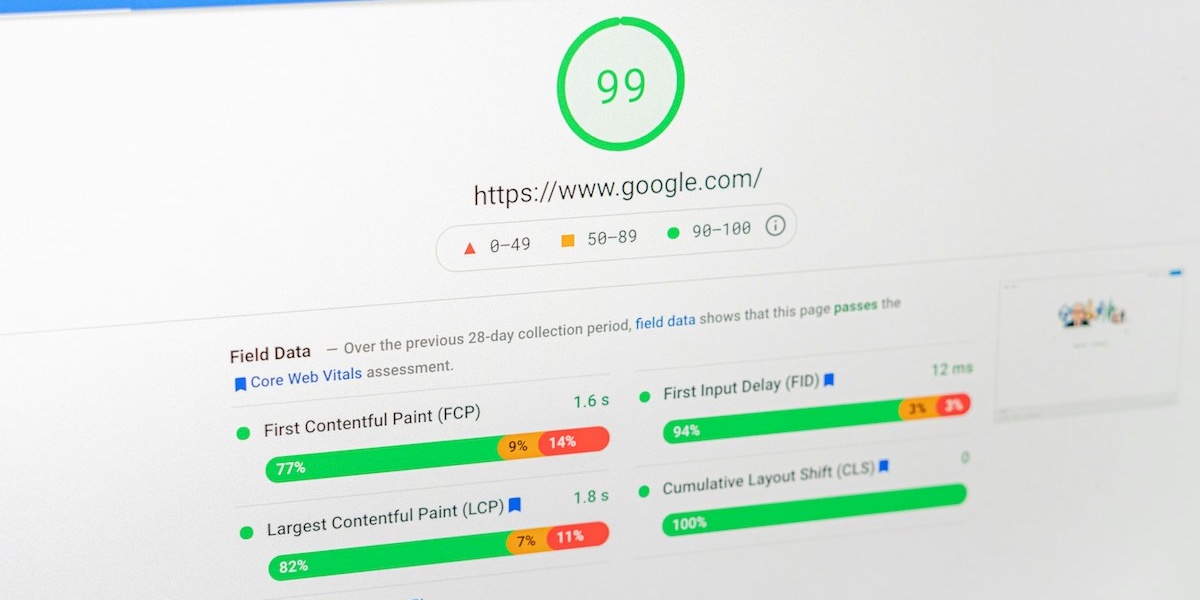
Why Speed is the New Currency in Malaysia’s Digital Economy
For Malaysian business owners, the digital landscape is defined by speed and mobile access. With one of the highest mobile penetration rates in Southeast Asia, your customer is likely browsing your site on a smartphone, often while on the move. In this environment, a slow-loading website is not merely an inconvenience; it is a direct loss of revenue and a significant erosion of brand credibility. The modern consumer expects instant gratification, and if your site takes more than three seconds to load, they are already navigating to a competitor.
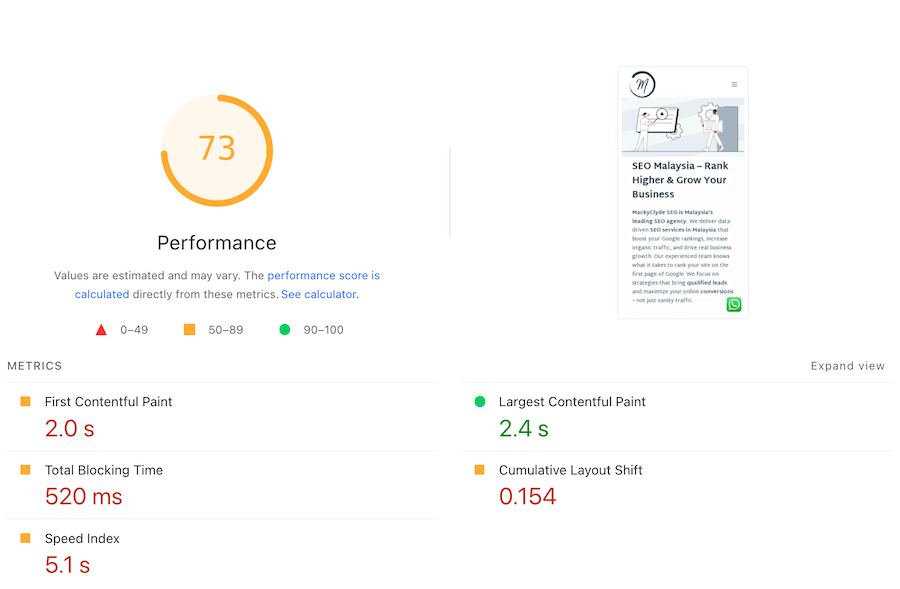
Google PageSpeed Insights (PSI) is the definitive, free tool that analyzes your website’s performance and provides actionable recommendations to improve user experience. This performance directly impacts your search ranking and sales in the competitive Malaysian market. Understanding and acting on PSI’s data is no longer optional; it is a fundamental requirement for sustained online success.

What is Google PageSpeed Insights and Why Does it Matter?
PSI provides a comprehensive performance report by measuring two critical data sets: Lab Data (simulated performance) and Field Data (real-user data collected from the Chrome User Experience Report, or CrUX). This dual perspective offers a holistic view of your site’s health. The most critical metrics PSI tracks are the Core Web Vitals (CWV), which Google has established as key ranking signals that reflect the real-world user experience.
Decoding the Core Web Vitals (CWV)
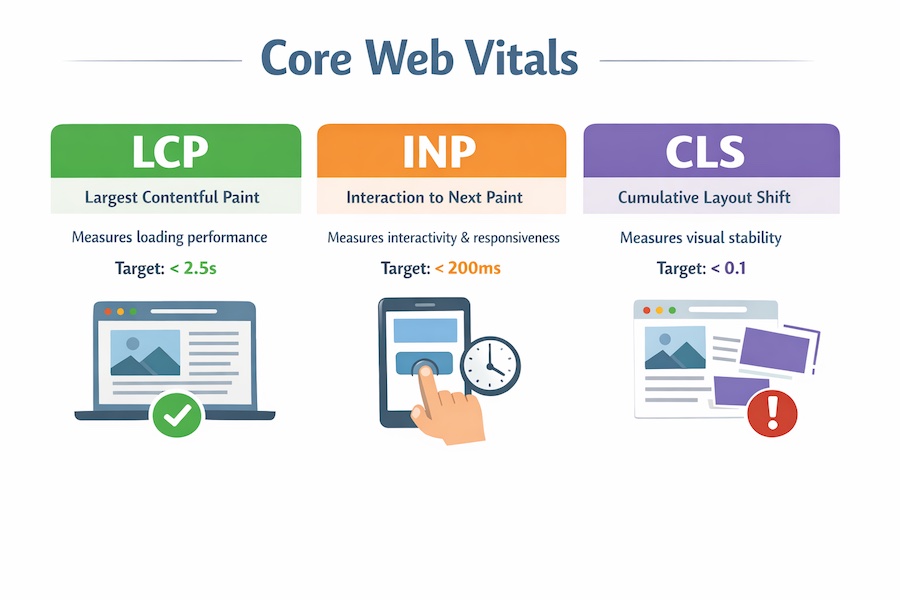
The Core Web Vitals are the foundation of modern web performance. They quantify the loading, interactivity, and visual stability of your website.
| Metric | What It Measures | “Good” Threshold | Business Impact |
| Largest Contentful Paint (LCP) | The time it takes for the largest content element (image or block of text) to become visible. | Less than 2.5 seconds | Measures loading performance; a slow LCP means users wait longer to see the main content. |
| Interaction to Next Paint (INP) | The responsiveness of the page to user input (clicks, taps, keyboard). | Less than 200 milliseconds | Measures interactivity; a high INP means a laggy, frustrating user experience. |
| Cumulative Layout Shift (CLS) | The visual stability of the page; how much content unexpectedly moves around. | Less than 0.1 | Measures visual stability; a high CLS leads to accidental clicks and a lack of trust. |
The Business Case for Speed: Conversions, Credibility, and Malaysian SEO
For a Malaysian SME, optimizing for speed translates directly into a stronger bottom line. A fast, reliable website is a powerful signal of professionalism and trustworthiness, which is a critical component of Google’s E-E-A-T (Experience, Expertise, Authoritativeness, Trustworthiness) framework.
| Benefit | Impact on Malaysian SME | PSI Metric Supported |
| Increased Conversions | Lower cart abandonment rates and higher checkout completion on e-commerce platforms. | LCP, INP |
| Higher Search Rankings | Improved visibility in Google SERPs, especially for mobile-first indexing and local searches. | All CWV |
| Reduced Ad Spend | Higher Quality Score in Google Ads, which lowers your Cost Per Click (CPC) and improves campaign efficiency. | LCP, INP |
| Enhanced Credibility | A professional image that builds immediate trust with potential customers, reducing bounce rate. | CLS |
The Universal Page Speed Optimization Checklist (For All Websites)
Regardless of your chosen platform, these foundational technical steps are essential for achieving a high PSI score.
Image Optimization: The Biggest Speed Killer
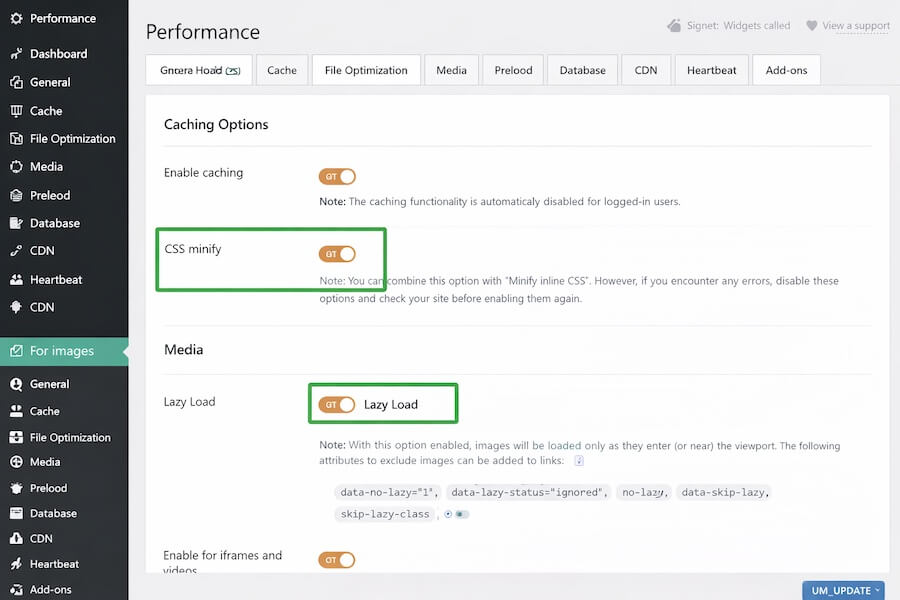
Images are often the single largest contributor to slow load times. The solution is a multi-layered approach that prioritizes efficiency without sacrificing quality. You must compress images before upload using tools like TinyPNG, and where possible, utilize modern, highly efficient formats such as WebP or AVIF. Furthermore, implementing lazy loading ensures that images outside the user’s current viewport are only loaded when they scroll down, drastically improving the initial LCP score.
Modern AI-driven image optimization services can automatically detect the user’s device and connection speed, serving the perfect image size and format in real-time. This dynamic optimization is a significant performance advantage over static, one-size-fits-all solutions.
Code Efficiency (Minification and Caching)
Code efficiency is about reducing the amount of data the browser has to download and process. Minification involves removing unnecessary characters (like white space and comments) from your HTML, CSS, and JavaScript files to reduce their size. Leveraging browser caching instructs the user’s browser to store static assets locally, meaning returning visitors load your site almost instantly, as they do not need to re-download the bulk of your site’s resources.
Server and Hosting Matters (The Malaysian Edge)
Your server’s location and configuration are paramount. To minimize the Time To First Byte (TTFB), the time it takes for the server to respond to a request, you should prioritize a reputable host with servers physically located in Southeast Asia. This geographical proximity drastically reduces latency for your Malaysian audience.
In addition, every website should utilize a Content Delivery Network (CDN) like Cloudflare. A CDN caches your site’s static content on servers distributed globally, ensuring that a user in Johor Bahru or Penang receives your content from the nearest possible location, guaranteeing faster delivery and improved performance across the entire country.
Platform-Specific Speed Strategies for Malaysian Business Owners
Optimization is not a one-size-fits-all task. The approach you take must be tailored to the underlying technology of your website.
WordPress: Plugins and Performance Power-Ups
WordPress, while powerful, is notorious for performance issues caused by bloated themes and excessive plugins. The expert strategy is to start with a lightweight, performance-focused theme (e.g., Astra, GeneratePress) and be ruthless in minimizing your plugin count.
Actionable Steps:
1.Caching Plugin: Install a premium caching solution (e.g., WP Rocket, LiteSpeed Cache) to handle minification, caching, and database optimization automatically.
2.Defer JavaScript: Use your caching plugin or a dedicated tool to defer or delay the loading of non-critical JavaScript until after the main content has loaded, directly improving LCP and INP.
3.PHP Version: Ensure your server is running the latest stable version of PHP (currently 8.x), as each major version offers significant performance gains.
Shopify: E-commerce Speed for Conversions
Shopify is built for speed, but its performance can be quickly degraded by heavy, third-party apps and outdated themes. For e-commerce, speed is directly tied to conversion rate.
Actionable Steps:
1.App Audit: Conduct a quarterly audit to remove all unnecessary or duplicate apps. Each app adds code that slows down your store.
2.Theme Modernization: Migrate to a modern, performance-focused theme like Dawn or any other OS 2.0 theme, which are optimized for Core Web Vitals.
3.Image Optimization: Rely on Shopify’s native image optimization tools, which automatically serve images in the correct size and format for the user’s device.
4.Liquid Code: Avoid complex custom Liquid code that increases server-side rendering time.

AI Website Builders (Wix, Squarespace, Zyro): Leveraging Built-in Optimisation
Platforms like Wix, Squarespace, and Zyro offer ease of use but limit your access to the underlying code. Your optimization strategy must focus on maximizing the platform’s native speed features.
Actionable Steps:
1.Use Native Tools: Always use the platform’s built-in image optimization and caching features. Do not attempt to use external tools that may conflict with the builder’s architecture.
2.Limit Custom Elements: Be judicious with custom code or heavy third-party widgets, as these are the primary source of performance degradation on these platforms.
3.Clean Templates: Choose a clean, modern template and stick to the recommended design elements to ensure proper structure and fast rendering.
Custom-Built Websites: Advanced Performance Tuning
For custom-built sites, you have full control, which demands a more advanced, technical approach to performance.
Actionable Steps:
1.Modern Rendering: Implement Server-Side Rendering (SSR) or Static Site Generation (SSG) using frameworks like Next.js or Nuxt.js to ensure the user receives a fully rendered page instantly.
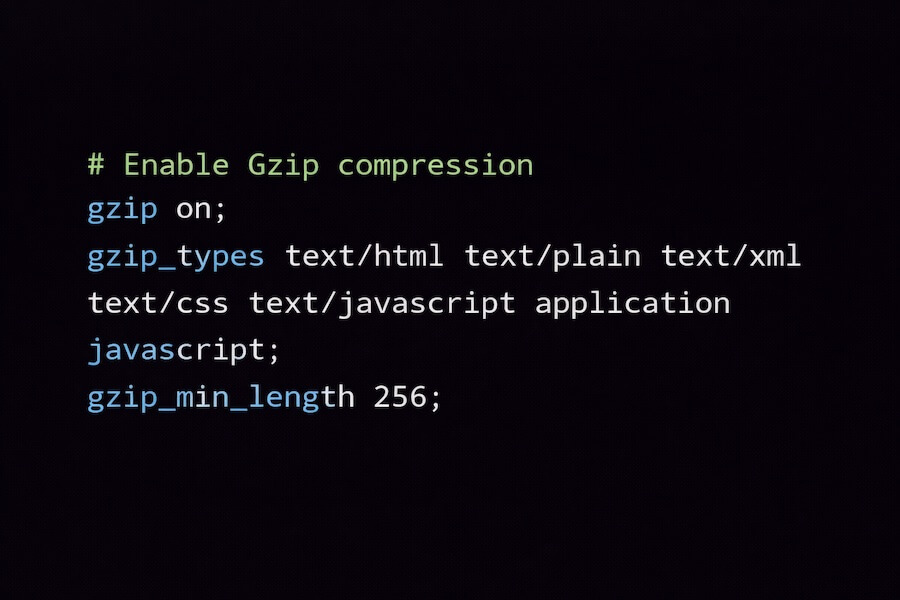
2.Compression: Ensure Gzip or Brotli compression is enabled on your server to reduce the size of all text-based assets transferred over the network.
3.Critical Rendering Path (CRP): Manually optimize the CRP by inlining critical CSS (the styles needed for the above-the-fold content) and deferring the rest.
4.Protocol Upgrade: Migrate your server to use modern protocols like HTTP/3 for faster, more reliable connections.
Conclusion: Your Next Step to a Faster, More Profitable Website
A high Google PageSpeed Insights score is not a vanity metric; it is a direct driver of business success in the Malaysian digital economy. By focusing on the Core Web Vitals and implementing these platform-specific strategies, you are investing in a faster, more reliable, and ultimately more profitable website.
However, the landscape of web performance is constantly evolving, particularly with the rise of AI-driven search. If you find the technical demands of optimizing LCP, INP, and CLS overwhelming, or if you need to integrate advanced AI-driven performance monitoring and predictive optimization, expert assistance is essential.
At MackyClyde SEO, we’ve moved beyond traditional speed fixes. Our AI SEO service leverages predictive modeling to identify performance bottlenecks before they impact your rankings. By integrating machine learning into your technical stack, we ensure your site doesn’t just pass the PageSpeed test today but remains optimized for the evolving demands of AI-driven search engines.
Your next step is simple: Run your website through Google PageSpeed Insights today and start with the most critical fix identified in the report. Scaling your performance to an elite level requires more than just plugins; it requires a data-driven strategy. Partnering with a team like MackyClyde SEO ensures your technical SEO is future-proofed through advanced AI-driven optimization.