
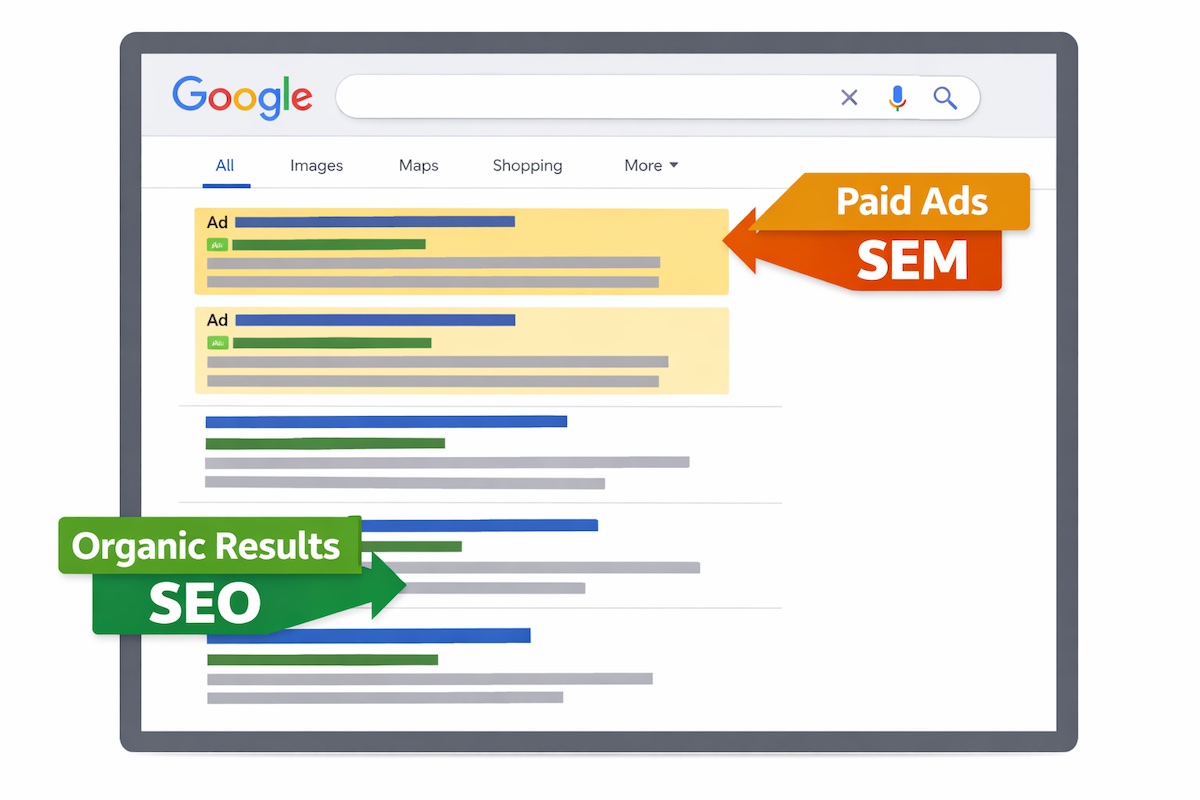
If you’re running a business in Malaysia and want more customers finding you on Google, you’ve probably heard about SEO and SEM. The problem is that most guides either oversimplify these strategies or drown you in jargon. This guide cuts through the noise and gives you what you actually need to know.
SEO and SEM are not the same thing, but they work best together. One builds your long-term presence, the other gets you immediate visibility. Understanding when and how to use each can be the difference between wasting your marketing budget and actually growing your business.
What SEO Really Means for Malaysian Businesses
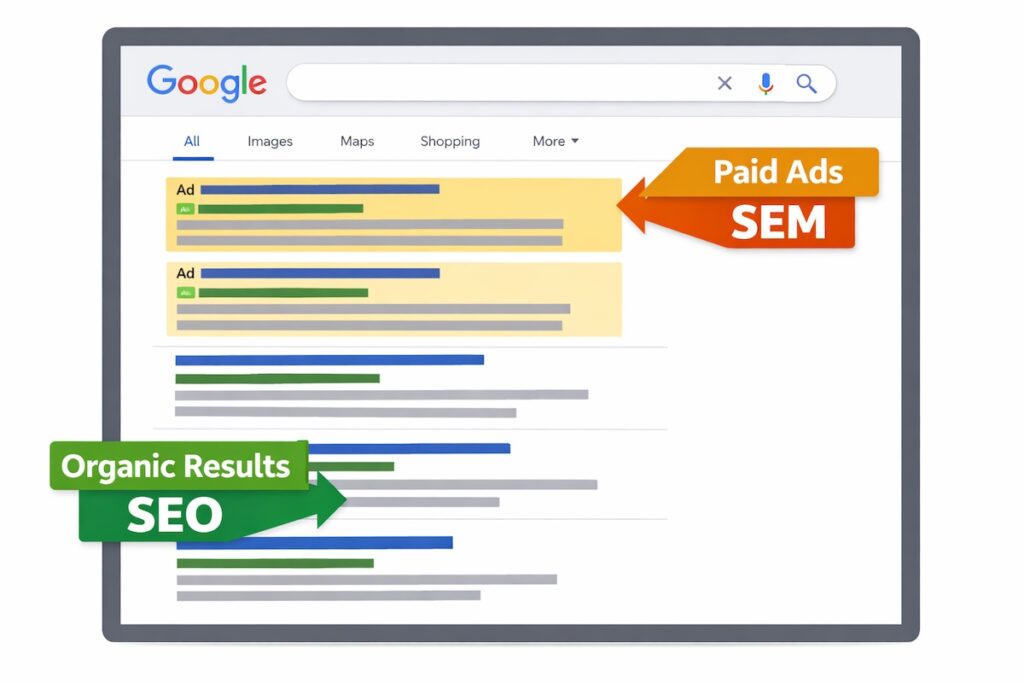
Search Engine Optimization is how you get your website to show up in Google’s organic results without paying for ads. When someone in Penang searches for “best nasi lemak near me” or a business owner in KL looks for “accounting software Malaysia,” the websites that appear below the ads got there through SEO.
The reason SEO matters is simple: people trust organic results more than ads. When your bakery in Johor Bahru ranks on page one for “custom cakes JB,” you’re not just getting clicks. You’re getting customers who already see you as credible because Google ranked you there.
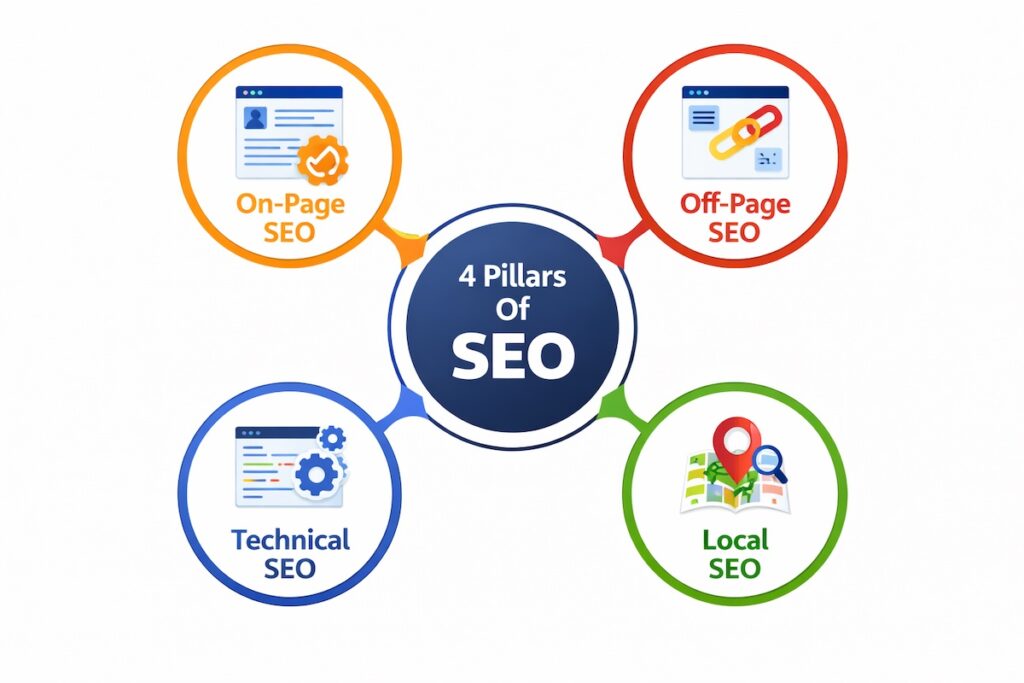
SEO has four main components. On-page SEO covers everything on your website like content quality, keyword placement, and meta descriptions. If you run a batik shop in Melaka, your product pages should naturally include phrases like “traditional batik Melaka” or “handmade batik sarong.” Off-page SEO is about building authority through backlinks from other Malaysian websites, local blogs, or news portals. Technical SEO ensures your site loads fast, works on mobile devices (critical since most Malaysians browse on phones), and can be easily crawled by Google. Local SEO optimizes your Google Business Profile so you appear in map results when people search for businesses near them.
The challenge with SEO is time. You won’t see results overnight. Most businesses need 3-6 months before they start ranking for competitive keywords. But once you’re there, the traffic keeps coming without paying for each click.
This is where AI-powered SEO tools are changing the game. At MackyClyde SEO, we use AI to analyze search patterns specific to Malaysian users, identify content gaps your competitors missed, and predict which keywords will drive actual conversions, not just traffic. Traditional SEO guesses what works. AI SEO knows what works because it processes millions of data points in real time.
Understanding SEM and Paid Search
Search Engine Marketing is the broader term that technically includes SEO, but most people use SEM to mean paid advertising on search engines. When you see ads at the top of Google results marked “Sponsored,” that’s SEM.
The main platform for SEM in Malaysia is Google Ads. You bid on keywords, write ad copy, and pay each time someone clicks your ad. If you’re a furniture store in Kuala Lumpur and bid on “office furniture KL,” your ad can appear within hours of launching your campaign.
SEM gives you three things SEO can’t: speed, precision, and control. You can start getting traffic today, target specific demographics (like showing ads only to people in the Klang Valley), and turn campaigns on or off based on your budget. If you’re launching a Hari Raya promotion, SEM lets you capitalize on that short window when demand is high.
The downside is cost. Every click costs money, and the moment you stop paying, your traffic stops. Competitive keywords in Malaysia can cost anywhere from RM2 to RM50 per click depending on your industry. If you’re in insurance or legal services, costs go even higher.
What makes SEM work is not just throwing money at Google Ads. You need compelling ad copy, landing pages that actually convert, and constant optimization. A fashion retailer we worked with was spending RM10,000 monthly on Google Ads with minimal returns. After restructuring their campaigns and using AI to optimize bid strategies, they cut costs by 40% while doubling conversions.
AI is particularly powerful in SEM because it can adjust bids in real time based on conversion probability. Instead of paying the same amount for every click, AI identifies which clicks are most likely to turn into sales and bids more aggressively on those while reducing spend on low-intent traffic.
The Real Difference: SEO vs SEM
Here’s what you need to know when deciding between SEO and SEM for your Malaysian business.
Cost Structure: SEO requires investment in content creation, technical optimization, and link building, but you don’t pay per click. SEM operates on a pay-per-click model where costs add up quickly, especially in competitive industries.
Time to Results: SEO takes months to show significant results. SEM delivers traffic within hours of launching a campaign.
Traffic Quality: SEO traffic tends to have higher trust because users see organic results as more credible. SEM traffic is immediate but stops the moment you stop paying.
Sustainability: Once you rank organically through SEO, you can maintain that position with ongoing optimization. SEM traffic disappears when your budget runs out.
Best Use Cases: SEO works best for building long-term brand authority, content marketing, and generating consistent leads. SEM excels at product launches, seasonal promotions, time-sensitive offers, and testing new markets before committing to long-term SEO.
Most successful Malaysian businesses don’t choose between SEO and SEM. They use both strategically. A local bakery might use SEO to rank for “custom cakes Johor Bahru” year-round while running SEM campaigns during wedding season or festive periods when demand spikes.
| Feature | SEO (Search Engine Optimization) | SEM (Search Engine Marketing) |
| Cost | No direct cost per click, but requires investment in time, expertise, and tools | Pay-per-click model where you pay each time someone clicks your ad |
| Time to Results | Long-term strategy that usually takes 3 to 6 months or longer to show strong results | Immediate visibility with ads appearing within hours of launch |
| Traffic Type | Organic traffic that builds credibility and trust over time | Paid traffic that delivers instant visibility |
| Sustainability | Highly sustainable once rankings are achieved and maintained | Traffic stops immediately when ad spend is paused |
| Best For | Long-term brand authority, consistent lead generation, and content-driven growth | Product launches, promotions, time-sensitive campaigns, and market testing |
How to Combine SEO and SEM for Maximum Impact
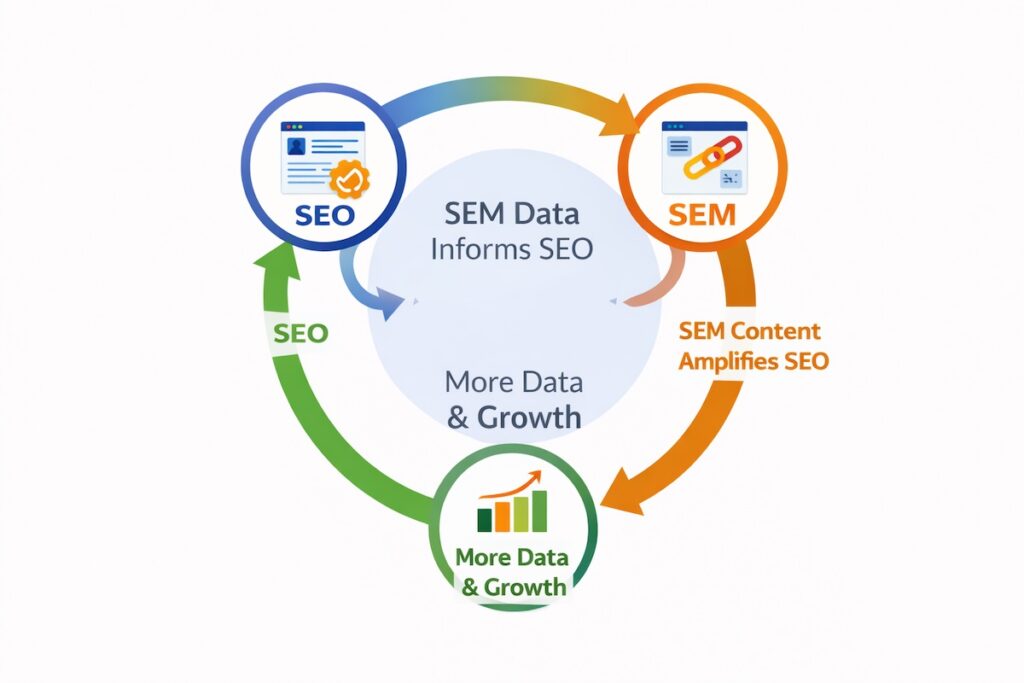
The businesses that dominate search results in Malaysia don’t just do SEO or SEM. They do both, and they do it strategically.
Start by using SEM data to inform your SEO strategy. When you run Google Ads campaigns, you get immediate data on which keywords actually convert. If you’re a skincare brand and your SEM data shows that “organic face serum Malaysia” converts at 8% while “natural skincare products” converts at 2%, you know which keyword to prioritize in your long-term SEO content strategy.
Content amplification is another powerful tactic. Let’s say you publish an in-depth guide on “How to Choose Accounting Software for Malaysian SMEs.” That’s solid SEO content, but it takes time to rank. Run a short SEM campaign promoting that guide to your target audience. You get immediate traffic, and the engagement signals (time on page, low bounce rate) tell Google your content is valuable, which helps it rank faster organically.
Remarketing bridges the gap between first visit and conversion. Someone finds your website through organic search, browses your products, but doesn’t buy. With SEM remarketing, you can show them targeted ads as they browse other websites, bringing them back to complete the purchase.
The ultimate goal is SERP dominance. When your business appears in both the paid ads at the top and the organic results below, you own that search query. Users see your brand multiple times, which builds trust and increases the likelihood they’ll click through to your site.
At MackyClyde SEO, we’ve seen Malaysian businesses increase their overall search visibility by 40% when combining SEO and SEM compared to using either strategy alone. The key is integration, not isolation.
Preparing for the Future: AEO, GEO, and E-E-A-T
Search is changing faster than most Malaysian businesses realize. If you’re still optimizing only for traditional Google results, you’re already behind.
Answer Engine Optimization (AEO) is about getting your content featured in Google’s featured snippets and “People Also Ask” boxes. When someone searches “How much does it cost to ship from KL to Penang,” Google often shows a direct answer at the top of the page. If that answer comes from your website, you get visibility without needing to rank number one.
To optimize for AEO, structure your content in a question-and-answer format. Use clear headings. Create FAQ sections on your service pages. For example, if you run a logistics company, a page titled “Shipping Costs from Kuala Lumpur to Penang” with a direct answer in the first paragraph (like “Shipping from KL to Penang typically costs between RM15-RM50 depending on package weight and courier service”) is more likely to get featured.
Generative Engine Optimization (GEO) is even newer. With tools like ChatGPT and Perplexity becoming popular for search, your content needs to be structured so AI engines can easily cite it. This means clear, authoritative information with proper citations and structured data. When someone asks ChatGPT “What’s the best CRM for Malaysian SMEs,” the AI pulls from sources it trusts. If your content is well-structured and authoritative, you get mentioned.
AI is already changing how people search. Queries are getting longer and more conversational. Instead of typing “SEO agency KL,” users now ask “Which SEO agency in Kuala Lumpur specializes in e-commerce businesses?” Your content needs to match that natural language.
E-E-A-T (Experience, Expertise, Authoritativeness, Trustworthiness) is Google’s framework for evaluating content quality. For Malaysian businesses, this means you need to prove you know what you’re talking about.
Show experience by including real examples from your work. If you’re writing about SEO, mention actual results you’ve achieved for clients. Display expertise through author bios, certifications, and years in business. Build authoritativeness by getting featured in Malaysian publications, earning backlinks from trusted sites, and collecting genuine reviews. Establish trust with a clear About Us page, contact information, secure website (HTTPS), and transparent business practices.
This is where AI-powered content strategies at MackyClyde SEO make a difference. We don’t just create content. We use AI to analyze what Google’s algorithm actually rewards, identify E-E-A-T gaps in your current content, and structure everything to meet both traditional SEO and emerging AEO/GEO requirements.
What You Should Do Next
If your budget is tight, start with local SEO. Claim and optimize your Google Business Profile. Make sure your business name, address, and phone number are consistent across all online directories. Create helpful content that answers questions your customers actually ask.
If you need results now, launch a targeted SEM campaign. Focus on your most profitable products or services. Start small, test what works, and scale up the winners. Don’t waste money on broad keywords. Get specific. Instead of “furniture Malaysia,” try “ergonomic office chairs Petaling Jaya.”
For long-term dominance, invest in both. Use SEM to get immediate visibility and gather data. Use that data to build an SEO strategy that compounds over time. The businesses winning in Malaysian search results right now aren’t choosing between SEO and SEM. They’re using both strategically.
The search landscape is evolving. AI is changing how people find information, how Google ranks content, and what it takes to stay visible. The businesses that adapt now will have a massive advantage over those that wait.
If you want to see how AI-powered SEO and SEM can work for your specific business, MackyClyde SEO offers a free audit that shows exactly where you’re losing visibility and what it would take to fix it. No generic advice. Just data-driven insights specific to your industry and the Malaysian market.