
Key Takeaways
- XHS (Xiaohongshu / Red Note) functions as a search engine, and Malaysian users are actively using it to discover products, services and brands.
- Search discovery on XHS is driven by keyword-rich captions, hashtags, note titles and profile bios, not follower count.
- Chinese-Malaysian consumers represent the primary user base, but Malay and English-language content is expanding as the platform’s reach widens.
- XHS SEO and Google SEO share structural similarities (keyword intent, content relevance, authority signals) but operate on completely different ranking signals and content formats. Healthcare providers especially need to understand these differences when developing their local SEO strategy.
- Brands that build a keyword-optimised content library on XHS now will establish early advantage before competition increases in the Malaysian market.
Why Malaysian Brands Cannot Afford to Ignore XHS Search in 2026
XHS (小红书), widely known in Malaysia as Red Note or Xiaohongshu, reported 300 million monthly active users globally by 2024. What followed accelerated adoption across Southeast Asia: the January 2025 TikTok uncertainty in the United States prompted significant creator migration, bringing international attention to the platform that directly influenced Malaysian consumer behaviour.
By mid-2025, Malaysian search data showed increased volume in queries around “Red Note Malaysia,” “Xiaohongshu Malaysia brands” and “how to use XHS.” Among Chinese-Malaysian consumers who had used the platform since 2022-2023, usage patterns shifted notably. Users were opening XHS to research products, find restaurant recommendations, compare skincare options and locate services, much as they once used Google.
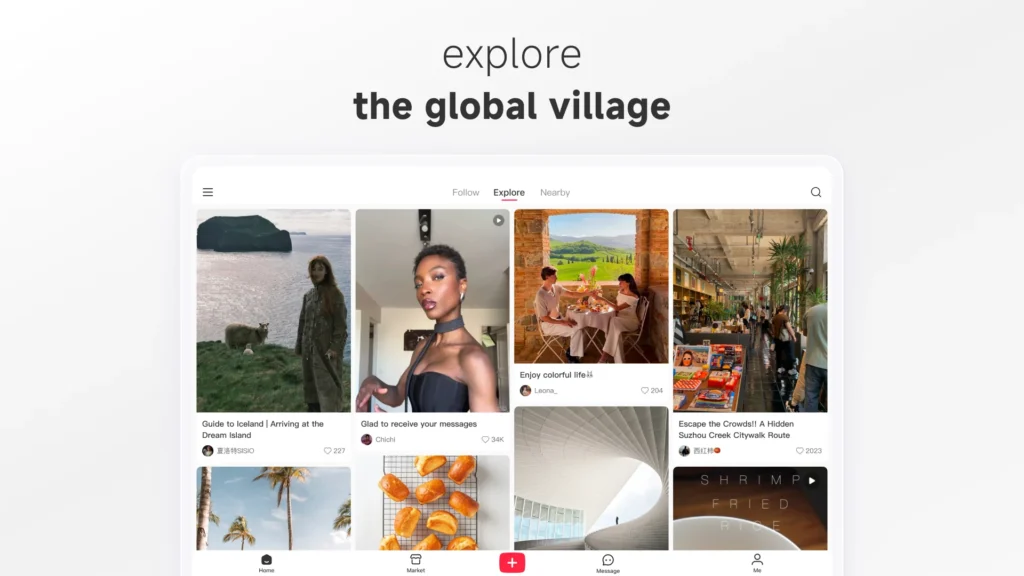
This shift has escaped most Malaysian marketers’ attention. XHS is not Instagram or TikTok. It operates as a visual search engine with a social layer, not the other way around.
If your brand is not optimised for XHS search, you are not visible to a segment of Malaysian consumers who now prefer discovering brands through this channel.
Understanding How XHS Search Actually Works
XHS search algorithm surfaces content based on specific ranking factors. Most Malaysian brands fail because they treat XHS as Instagram, then wonder why posts reach no one. Large organisations face similar strategic challenges when managing enterprise SEO in Malaysia. As search evolves, brands must also consider optimising for AI systems that recommend businesses directly. For comprehensive digital visibility, brands should also evaluate their SEO strategy in Malaysia. Similarly, businesses need to ensure they’re visible in Google Maps search results for location-based queries. Understanding your current search performance requires a comprehensive SEO audit first.
XHS Is a Keyword-Driven Discovery Engine
When a Malaysian user types “推荐护肤品 Malaysia” (recommended skincare Malaysia) or “KL brunch spot 2026” into the XHS search bar, the platform returns a ranked grid of notes (XHS’s term for posts). The ranking is not determined by follower count. Instead, XHS weighs relevance signals embedded in the content itself.
The primary factors XHS search considers include:
Note title keyword match. The note title is the single most important text field for search ranking on XHS, functioning similarly to an H1 tag on a webpage. A note titled “平价护肤品推荐 2026 KL” (budget skincare recommendations 2026 KL) will rank significantly better for those terms than a note titled “My Morning Routine” with identical images.
Caption keyword density and relevance. The caption beneath a note is indexed for search. Brands that write descriptive, keyword-rich captions rather than emoji-only text provide XHS far more signal to work with. This means writing the way your audience searches, not keyword stuffing.
Hashtag taxonomy. XHS hashtags function as categorical signals that help the platform cluster content into topic channels. Relevant, specific hashtags help XHS route your content to users searching within that topic area, rather than generic hashtags with millions of uses.
Engagement velocity and quality. Saves (收藏) represent the strongest engagement signal on XHS, more than likes and comments. Saves indicate content has durable value, which search engines prioritise for visibility. Comments containing keywords also contribute to relevance signals.
Profile completeness and keyword alignment. The XHS account bio, username and category selection all shape how the platform understands your account’s focus. A skincare brand with category keywords in the bio receives different algorithmic treatment than one with generic taglines.
The Search Intent Landscape on XHS Malaysia
Search intent on XHS Malaysia clusters into four primary categories:
Product and service discovery. Users search for the best, most recommended or most popular version of a category. Examples include “best moisturiser for oily skin Malaysia” or “affordable hair salon KL.”
Experience validation. Users search for honest reviews and real experiences before purchasing or booking, such as “Wonderlab supplement review” or “Aloft KL review 2026.”
Tutorial and how-to content. Users search for instructional content, typically in beauty, cooking, fitness and home organisation categories.
Location-based search. Users search for recommendations in a specific city or area, making XHS a direct competitor to Google Maps and local SEO in verticals including food and beverage, lifestyle and beauty.
Which intent type your brand fits into determines what kind of notes to create and how to structure them with titles and captions.
The XHS SEO Framework for Malaysian Brands
Optimising for XHS discovery requires a structured keyword-driven content strategy adapted to the platform’s content format and ranking behaviour.
Step 1: XHS Keyword Research for the Malaysian Market
XHS has a native search bar with auto-suggestions like Google’s autocomplete. This is your primary keyword research tool. Open XHS and search for your core product or service category, recording every autocomplete suggestion. These represent real searches that users are making within the platform. For Malaysian brands, you will see a mix of Mandarin Chinese, English and occasionally Malay terms, reflecting actual user language behaviour on XHS.
Also check the “Related searches” at the bottom of results pages. These function like Google’s “People also search for” feature and reveal adjacent keyword clusters worth targeting.
Priority keyword categories for Malaysian brands include:
- Category keywords: What is your product or service called in the language your target audience uses on XHS?
- Benefit keywords: What outcome does your customer want? (Glowing skin, affordable option, fast delivery Malaysia)
- Location keywords: For local businesses, which city, area or neighbourhood modifiers do users add to searches?
- Comparison and review keywords: “Worth it or not,” “review,” “before and after,” “honest opinion”
For brands serving both Chinese-Malaysian and Malay-speaking markets, create separate keyword maps for each language. Translation from Malay to Mandarin does not produce equivalent search intent or volume.
Step 2: Note Structure Optimisation
Each piece of content should be structured with search discoverability as a primary objective.
The note title allows 60 characters maximum. Lead with your primary keyword and be specific rather than clever. “防晒霜推荐 Malaysia 2026 – 中文皮肤必看” will outperform “Summer Skin Essentials” for search purposes.
Write a caption of 150 to 300 characters minimum. Structure it to answer a question your target searcher would have. For skincare products, address what the product does, who it serves, where to buy it in Malaysia and your genuine assessment. Apply E-E-A-T principles: real experience, real specificity, real usefulness.
Use hashtags strategically with a mix including:
- One to two broad category hashtags (high volume, competitive)
- Three to four specific niche hashtags (lower volume, higher relevance)
- One to two location hashtags if relevant, such as #KLfoodie or #PJskincare
Avoid padding with irrelevant trending hashtags.
High-quality images with strong composition and readable text overlays consistently outperform low-quality visuals even when keyword optimisation is equivalent.
Step 3: Profile Authority Signals
Your XHS profile is a brand entity page. The strength of that entity affects how XHS weighs the content you publish.
Include your brand name and a category keyword in your username or display name where possible. A beauty brand named “LumiGlow” might use the display name “LumiGlow 护肤 | Malaysia Skincare.”
Write your bio in your primary target audience’s language. Include your category, key benefit statement and location. Avoid abstract brand slogans containing no searchable terms.
Post two to four times per week. Account-level consistency is rewarded in XHS’s algorithm. Brands with regular publishing maintain higher baseline visibility than those publishing in bursts.
Switch to a professional account (专业号) to access analytics, display a business category badge and expand profile fields. These elements strengthen how the platform understands your account’s authority and relevance.
Learn how to to Build topical authority through consistent content
Language Strategy for Malaysian Brands on XHS
Malaysian XHS strategy requires distinct approaches for different language audiences.
The Three-Language Reality of XHS Malaysia
Simplified Chinese (Mandarin) remains the dominant language on XHS and the primary language of the platform’s Chinese-Malaysian user base. For brands targeting Chinese-Malaysian consumers, Mandarin content is not optional; it is the entry requirement.
English-language content on XHS Malaysia has grown since 2025 as non-Chinese-Malaysian users adopted the platform. English notes perform well in travel, lifestyle, fitness, tech and international brand reviews. Malaysian micro-influencers use English when creating content for mixed-language audiences.
Bahasa Malaysia-language content on XHS is emerging and growing as Malay-speaking users, particularly younger demographics, begin adopting the platform. For brands serving the mass Malaysian market, early investment in Malay-language content offers significant competitive advantage before adoption increases.
The correct language strategy depends entirely on which Malaysian market segment you are targeting. A Chinese medical clinic in Cheras needs a fundamentally different approach than a national food and beverage chain targeting all demographic groups.
Do not publish the same note in multiple languages within a single post. This dilutes the keyword signal for each language. Instead, create separate fully optimised notes for each language target, each with its own keyword-mapped title, caption and hashtag set.
Industry Verticals Where XHS SEO Has the Highest Impact in Malaysia
Not every business category has the same XHS opportunity. The following verticals are seeing the highest search-driven discovery activity on XHS in 2026:
Beauty, Skincare and Personal Care. This remains XHS’s strongest vertical globally and in Malaysia. Product reviews, before-and-after content and ingredient education drive substantial search volume. Malaysian beauty brands and distributors investing in XHS content report measurable traffic and conversion results.
Food and Beverage. Restaurant discovery, café recommendations and food product reviews perform well. “Must-try” (必吃) and “hidden gem” (隐藏版) content formats earn high save rates and are actively searched by Malaysian users planning dining experiences.
Health, Wellness and Supplements. This category is growing among Malaysian Chinese consumers. Supplement brands, functional food products and health service providers report strong organic discovery on the platform.
Fashion and Lifestyle. Outfit recommendations, brand hauls and shopping guides perform well. Malaysian fashion brands publishing styling content with specific product keywords are building discoverability in a category with expanding XHS search volume.
Education and Professional Services. This is an emerging category. Malaysian users are beginning to search for service providers, tutors, professional courses and B2B services on XHS. Early-mover brands in professional services stand to establish strong positioning before adoption increases.
Travel and Local Experiences. Hotel reviews, attraction guides and “worth it or not” travel content attract searches. For local tourism businesses and hospitality brands, XHS search is becoming a discovery channel for Chinese-Malaysian and international Chinese tourist segments.
Measuring XHS SEO Performance: What to Track
Unlike Google Search Console, XHS does not provide external third-party analytics access. Measurement relies on the platform’s native professional account dashboard and manual tracking.
Track these metrics for XHS search performance:
Search-driven impressions. XHS professional accounts show impressions by source, including search. Monitor what percentage of note impressions come from search versus feed and discovery feed sources. A rising search percentage indicates improving keyword optimisation.
Save rate. Saves divided by impressions is a meaningful content quality metric. Notes with high save rates signal to XHS that your content has lasting reference value, which is a strong ranking signal.
Keyword ranking checks. Manually search your target keywords on XHS regularly and record where your notes appear in results. This is a manual process but offers the most direct measure of search position.
Profile search traffic. Monitor how often your brand name and category terms appear as search queries leading to your profile. Growing branded search volume on XHS indicates brand authority development on the platform.
Conversion tracking. For brands linking XHS content to specific actions like WhatsApp enquiries, website visits or in-store visits, UTM tracking on external links combined with customer surveys can attribute conversions to XHS discovery.
XHS SEO vs. Google SEO: Understanding the Relationship
A common question from Malaysian marketers is whether XHS SEO and Google SEO are competing priorities or complementary ones. They are complementary but require distinct strategies.
Google SEO targets users searching with high purchase or information intent who know what they want. XHS SEO targets users in discovery mode, influenced by peer recommendations and visual appeal.
These represent different stages of the same buyer journey. A Malaysian consumer might discover your skincare brand on XHS, save multiple notes about your products, and then search your brand name on Google to find the website and complete purchase. Optimising for both platforms means presence at discovery and decision stages.
Well-optimised notes with your brand name and product keywords appear in Google search results, contributing to your overall search footprint. Brands with a strong XHS presence often see improved branded search performance on Google.
The technical SEO skills underlying Google optimisation, including keyword research, content structure, intent matching and authority building, apply to XHS with platform-specific adaptations.
Where to Start: A Prioritised Action Plan for Malaysian Brands
If you are building your XHS search presence from zero in 2026, follow this sequence:
Week 1 to 2. Set up your professional account. Complete every profile field with keyword-aligned copy in your primary target language. Define your three to five core search keywords based on XHS autocomplete research.
Week 3 to 4. Publish your first 8 to 12 foundational notes. Each note should target one primary keyword in its title. Focus on content formats driving high save rates in your category: tutorials, comparisons, reviews and recommendations.
Month 2. Audit your first batch of notes using the platform’s search traffic data. Identify which titles and keyword combinations generated search impressions. Build on those keyword clusters.
Month 2 to 3. Begin building secondary keyword clusters around your best-performing primary keywords. Create notes answering adjacent questions your target searcher would ask.
Month 3 onwards. Establish a consistent publishing cadence of three to four notes per week. An account with 150 well-optimised notes will significantly outperform an account with 20 excellent notes and irregular publishing.
Frequently Asked Questions
Is XHS (Red Note / Xiaohongshu) relevant for Malaysian brands not targeting Chinese-speaking consumers?
Currently, the majority of XHS’s active Malaysian user base is Chinese-Malaysian, so brands targeting that demographic have the clearest immediate case for investment. The platform’s user base is expanding. English-language content is growing in reach, and Malay-speaking users are beginning to adopt XHS in increasing numbers, particularly younger demographics. Brands targeting multi-demographic Malaysian audiences should monitor the platform’s adoption trends and consider beginning with English or Malay content in relevant categories such as education, professional services and local retail.
How long does it take to see results from XHS SEO?
XHS operates differently from Google in timing. Well-optimised notes can generate search traffic within days of publishing, compared to weeks or months on Google. However, building a compounding library effect that drives consistent, sustainable discovery requires three to four months of consistent posting and keyword mapping. Expect to see preliminary search traffic within two to three weeks of launching your professional account and publishing keyword-optimised content.
Can I rank for the same keywords on XHS as I do on Google?
Not necessarily. Your Google keywords may differ significantly from your XHS keywords. A product you market as “vegan skincare serum” on Google might search better as “植物精华液” (plant essence liquid) on XHS with Malaysian Chinese audiences. Conduct separate keyword research for each platform rather than assuming translation equivalency. Search behaviour differs by platform and audience.
Should I invest in XHS if my business is primarily offline?
Yes, if your customers search for your business category on XHS. Offline restaurants, salons, clinics and retail stores benefit from XHS discovery because users actively search for location-based recommendations and peer reviews on the platform. XHS directly competes with Google Maps in these verticals for Malaysian Chinese consumers. Offline businesses need only a basic professional account and regular content showing your location, services and customer experiences. Working with an experienced SEO consultant can help align your XHS and Google search strategies effectively.
What is the best content format for XHS SEO?
The best format depends on your search intent category. Product reviews and comparisons drive high save rates and search discoverability. Before-and-after transformations perform strongly in beauty and wellness. Tutorial and educational content earns consistent search traffic. Location-based photos with specific captions work for food and beverage and local services. Experiment with two to three formats per month and track which earn the highest save rates relative to impressions, then scale the strongest performer.
How important is follower count on XHS?
Follower count has minimal impact on XHS search performance. New accounts with zero followers can rank for competitive keywords if content is keyword-optimised and generates saves. Authority comes from profile completeness, posting consistency, content quality and engagement, not follower count. Focus on optimisation and consistency rather than follower-building tactics.
Can I use the same captions and hashtags across multiple notes?
No. Each note requires unique captions and hashtag sets even if targeting similar keywords. Repeating identical captions across multiple notes signals low-effort content to XHS’s algorithm and weakens your profile authority. Write distinct captions for each note while maintaining keyword relevance.
Is Mandarin Chinese required to succeed on XHS Malaysia?
Mandarin is essential if you are targeting Chinese-Malaysian consumers, who currently form the largest actively-searching user base. English and Malay content can succeed if your product category and target demographic align. However,