You have a great restaurant in Bangsar. A boutique in Pavilion’s shadow. A plumbing service running across three Klang Valley districts. Yet when a customer nearby opens Google and types “best nasi lemak near me” or “plumber Shah Alam,” your business is nowhere to be found.
That is not a quality problem. It is a local SEO problem.
Local SEO in Malaysia is not a single strategy you copy from a Western playbook. Consumer search behaviour here runs across Bahasa Malaysia, English, and Mandarin. Google Business Profiles need to reflect hyperlocal context, right down to the mukim and township. And each vertical, food and beverage, retail, and services, has its own ranking signals and conversion patterns.
This guide breaks it down by industry so you can fix the right things, in the right order.
KEY TAKEAWAYS
- Local SEO Malaysia requires multilingual keyword targeting. Bahasa Malaysia, English, and Mandarin phrases each draw real, distinct search traffic.
- Google Business Profile (GBP) optimisation is the single highest-return local SEO task for any Malaysian business, regardless of vertical.
- Restaurants, retail, and service businesses have different ranking signals. A strategy built for one will underperform for the others.
- Local citations on Malaysian directories (Foursquare, Says.com, Zomato) contribute genuine authority signals to your local pack ranking.
- Reviews in multiple languages, responded to in the customer’s language, are a documented factor in local pack rankings.
Why local SEO in Malaysia works differently
Most local SEO guides are written for a single-language, single-culture market. Malaysia is neither of those things, and it shows in how people search.
The multilingual search reality
Malaysian consumers search the way they speak, and they code-switch constantly. A single user might search:
- “kedai makan near me” (Bahasa Malaysia)
- “best dim sum Chow Kit” (English with a location)
- “SS2 mamak open now” (colloquial shorthand)
Each phrase is a distinct keyword cluster with different intent and different competitors. If your GBP listing and website only address one language, you are invisible to large parts of your market.
The township-level geography problem
Malaysia’s addressing system, with its states, districts, mukim, townships, and taman, creates a geographic targeting challenge that catches many businesses off guard. Customers searching in Petaling Jaya often do not type “Selangor.” They type “SS15,” “Subang Jaya,” or “Taman Megah.” Knowing these hyperlocal naming conventions is where a local SEO strategy either connects with real searches or misses them entirely.
Local SEO for Malaysian restaurants: what the algorithm actually rewards
The food and beverage vertical is one of the most competitive local SEO spaces in Malaysia. Every kopitiam, café, and restaurant is competing for the same Maps screen.
Optimise your Google Business Profile for food discovery
For restaurants, Google Maps is usually where customers find you first, before your website, before social media. Your GBP is the first thing to get right.
Primary category: Be specific. “Nasi Kandar Restaurant” outperforms “Restaurant” because it matches the actual search term. Use secondary categories to capture related queries (“Halal Restaurant,” “Indian Restaurant”).
Menu integration: Upload your menu directly to GBP or link to a crawlable menu page on your website. Google reads menu content as a relevance signal. If “char kway teow” appears in your menu, you become eligible to rank for that phrase in Maps.
Photo volume and freshness: Businesses with more than 100 photos on GBP tend to receive more direction requests and calls. Upload new food photography weekly. Label image files descriptively before uploading. “Nasi-lemak-coconut-rice-kuala-lumpur.jpg” gives Google’s image recognition systems something to work with.
Operating hours precision: Include special hours for public holidays. Malaysia has 15 federal public holidays plus additional state-specific ones. A GBP listing that shows no special hours during a holiday may lose visibility for searches during that window.
Review strategy for restaurants
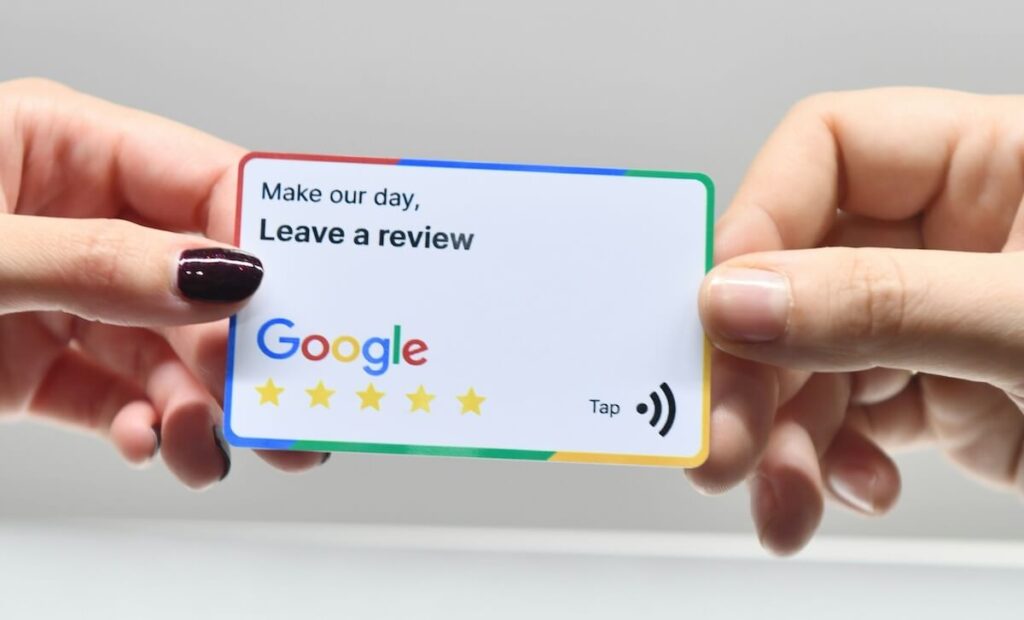
Reviews are a direct local pack ranking factor. For restaurants, they are also the primary conversion signal for undecided customers. A business with 4.3 stars and 600 reviews will almost always outrank one with 4.8 stars and 12 reviews.
Multilingual review cultivation: Train front-of-house staff to request reviews in the customer’s preferred language. A Mandarin-speaking customer who leaves a review in Chinese, responded to in Chinese, signals to Google that your business serves that community. Google uses that signal when ranking for Mandarin-language local searches.
Response cadence: Respond to every review within 48 hours. For negative reviews, respond publicly with a clear resolution path, then take the conversation offline. This demonstrates active management to future customers reading the thread and likely to the algorithm as well.
Schema markup for restaurant websites
Your website should implement Restaurant schema from Schema.org. At minimum, include:
name,address,telephone,openingHoursservesCuisine, using specific values like “Malaysian”, “Chinese-Malaysian”, “Mamak”hasMenupointing to your menu URLaggregateRating(only if pulled from a verified source)
Local SEO for Malaysian retail businesses: showing up before customers head to the mall
Retail local SEO in Malaysia is increasingly about winning the “near me” search before a customer decides where to go. The stakes are high: if you are not visible at that moment, a competitor gets the footfall.
Product-level local SEO
Most retail businesses optimise their GBP and stop there, leaving their website’s product pages doing nothing for local search. Create location-specific landing pages for your top product categories. A camera shop in Damansara should have a page titled “Camera Accessories Shop in Damansara Utama,” not a generic “Products” page. Each page should include:
- Location-specific H1 and title tags
- Natural use of township names (Damansara Utama, PJ, Petaling Jaya)
- Customer reviews embedded on the page or via a review widget
- An embedded Google Map pointing to your location
Local inventory and “in stock near me” queries
Google’s local inventory ads and merchant listings allow retail businesses to surface specific products in local search results. If a customer searches “Sony mirrorless camera in stock Damansara,” Google can serve your listing with real-time stock availability, but only if your inventory feed is connected.
Even without paid inventory ads, keeping your GBP product categories accurate and your “From the Business” attributes updated (e.g., “Women-owned,” “Locally sourced products”) helps you stand out in the local pack.
Malaysian retail citation building
For retail, NAP (Name, Address, Phone) consistency across Malaysian business directories is a foundational trust signal. Priority citation sources include:
- Google Business Profile (primary)
- Foursquare (powers many third-party apps)
- Yelp Malaysia
- Yellow Pages Malaysia (yellowpages.com.my)
- Says.com business listings
- Lokal.my (built specifically for Malaysian SMEs)
Any inconsistency in your business name, address format, or phone number across these platforms weakens the signals Google uses to verify your location.
Local SEO for Malaysian service businesses: ranking across areas you serve
Service businesses, plumbers, electricians, tutors, cleaning companies, face a different challenge. Customers do not come to you. You go to them across multiple districts, which changes how local SEO works.
Service Area Business (SAB) configuration in GBP
If your business has no customer-facing shopfront, configure your GBP as a Service Area Business. This hides your home address if applicable and replaces it with the districts you serve.
Best practice for Malaysian SABs:
- List service areas at the district or township level, not just the state
- Do not list more areas than you can realistically cover in a day
- Keep your primary business location set to where you are actually based, even if it is hidden from public view
Service page architecture for multi-area businesses
If you serve five areas, you need five dedicated service pages, not one generic page with a dropdown. A residential cleaning company covering Kuala Lumpur should build individual pages for:
- Cleaning Service Mont Kiara
- Cleaning Service KLCC / Bukit Bintang
- Cleaning Service Kepong
- Cleaning Service Cheras
- Cleaning Service Bangsar
Each page needs unique content, not just the location name swapped in. Include local testimonials, area-specific FAQs (“Do you serve condominiums in Mont Kiara?”), and a clear CTA specific to that area.
Trust signals for service businesses
Customers letting a tradesperson or service provider into their home are making a higher-stakes decision than a restaurant visit. Your local SEO needs to reflect that.
- Display certifications and registration numbers (e.g., CIDB for contractors, MOH for health and wellness services) on both your GBP and your website
- Post before/after photos with location tags in your GBP updates
- Use GBP Q&A proactively. Seed it with questions your customers actually ask, then answer them with enough detail to be genuinely useful
Work with Mackyclyde on local SEO
Local SEO in Malaysia is not complicated, but it is technical, multilingual, and different for every vertical. The signals that move a restaurant up in Maps are not the same ones that get a Shah Alam plumber into the local pack.
At Mackyclyde, we build local SEO strategies around Malaysian search behaviour: the right languages, the right directories, the right page architecture for your vertical.
If your business is not appearing where your customers are searching, we can show you exactly why and fix it.
Frequently asked questions about local SEO in Malaysia
How long does local SEO take to show results in Malaysia?
Most businesses see measurable improvements in Google Maps visibility within 60 to 90 days of a structured optimisation effort, primarily from GBP optimisation and citation building. Organic rankings for local landing pages typically take three to six months, depending on competition and domain authority.
Do I need a website to rank in Google Maps in Malaysia?
No. You can rank in the local pack with only a Google Business Profile. That said, businesses with optimised websites consistently outrank GBP-only competitors, particularly for competitive keywords. Your website reinforces your GBP and captures organic search traffic that Maps alone cannot reach.
Should my Google Business Profile be in Bahasa Malaysia or English?
Your primary GBP language should reflect how most of your customers search. For most urban Malaysian businesses, an English-primary listing with a Bahasa Malaysia business description is a practical starting point. More important is making sure your reviews and responses appear in multiple languages. That is what signals to Google that your business genuinely serves different language communities, and helps you rank for searches in those languages.
What is the single most important local SEO action for a new Malaysian business?
Claim and fully complete your Google Business Profile before anything else. A complete GBP, with accurate categories, photos, hours, services, and at least 10 reviews, delivers the fastest visible improvement and requires no budget.
How do reviews from Zomato or TripAdvisor affect Google rankings?
For restaurants, third-party review platforms like Zomato and TripAdvisor appear to carry weight in Google’s local relevance signals, though Google has not confirmed the exact mechanism. What is clear is that consistent, positive reviews across multiple platforms, not just GBP, improve your overall local search performance over time.
Can I rank for multiple townships if my business is only in one location?
Yes, through targeted content. Location-specific landing pages, GBP posts referencing nearby areas, and backlinks from township-level publications all extend your visibility beyond your physical address. This approach is especially effective for service businesses that operate across a wider area.