
Key Takeaways
- Local SEO is paramount for Malaysian businesses: With over 90% of Malaysians searching online before visiting a store, optimizing for local search is no longer optional; it’s a direct path to revenue. Mobile-first indexing and the prevalence of mobile searches (over 70%) further underscore this necessity.
- Google Business Profile (GBP) is your digital storefront: A fully optimized and actively managed GBP is the cornerstone of local visibility, driving directions, calls, and website clicks. Proactive engagement with Q&A and regular updates are crucial.
- Beyond traditional SEO: Embrace Generative Engine Optimization (GEO): The rise of AI Overviews means businesses must now optimize to be cited and recommended by AI platforms. This requires structuring content for extractability, building entity authority, and securing mentions across diverse platforms.
- Revenue-driven strategies are key: Local SEO efforts must directly translate into tangible business growth. This involves tracking not just rankings, but also GBP insights, website traffic from local sources, offline conversions, and ultimately, ROI.
- E-E-A-T (Experience, Expertise, Authoritativeness, Trustworthiness) is critical: Building strong E-E-A-T signals through detailed case studies, professional credentials, authoritative backlinks, and transparent business practices is essential for both human users and AI systems.
- Continuous optimization is non-negotiable: Local SEO is not a one-time setup. It demands ongoing maintenance, content updates, reputation management, and regular technical audits to adapt to evolving search algorithms and market dynamics.
Unlocking Local Growth in the Digital Age
In the vibrant and rapidly evolving digital landscape of Malaysia, local businesses face a dual challenge: standing out amidst fierce competition and effectively connecting with a mobile-first, digitally-savvy consumer base. The statistics are unequivocal: over 90% of Malaysians now conduct online research before making a purchase or visiting a physical store, with more than 70% of these local searches originating from mobile devices. This paradigm shift means that a robust online presence, specifically tailored for local search, is no longer a luxury but a fundamental imperative for survival and growth.
This guide delves into the intricate world of Local & Revenue SEO for Malaysia, offering a comprehensive, data-driven strategy designed to not only enhance your visibility in local search results but, crucially, to translate that visibility into tangible business revenue. We will explore the foundational elements of local SEO, advanced tactics for competitive markets, and the transformative impact of Artificial Intelligence (AI) and Generative Engine Optimization (GEO) on how Malaysian businesses are discovered. By the conclusion of this article, readers will possess a clear roadmap to dominate local search, attract ready-to-buy customers, and future-proof their digital marketing efforts in Malaysia.
The Foundation: Mastering Local SEO Fundamentals in Malaysia
Effective local SEO begins with a solid foundation. These core elements are non-negotiable for any Malaysian business aiming to capture its local market share.
A. Google Business Profile (GBP) Optimization: Your Digital Storefront
Your Google Business Profile (GBP) is arguably the single most critical component of your local SEO strategy. It serves as your primary digital storefront on Google Search and Maps, often being the first point of contact for potential customers. A meticulously optimized and actively managed GBP can significantly influence local search rankings and customer engagement.
Key Optimization Steps:
- Claim and Verify: Ensure your business listing is claimed and verified through Google. This grants you full control over the information displayed.
- Complete All Sections Accurately: Every field in your GBP should be filled out comprehensively. This includes your exact Name, Address, and Phone number (NAP), consistent business hours, appropriate primary and secondary categories, and a detailed description of your services or products. Pro Tip: Utilize the Products/Services showcase feature to highlight your key offerings and any ongoing promotions. This can significantly boost engagement and inform potential customers directly within the search results.
- High-Quality Visuals: Upload a diverse range of high-resolution photos and videos. This should include your storefront, interior, team members, products, and services in action. Businesses with compelling visuals receive significantly more requests for directions and website click-throughs. Studies indicate that businesses with photos receive 42% more requests for directions and 35% more click-throughs to their websites.
- Active Engagement: Regularly update your GBP with posts about news, events, offers, or new products. This signals to Google that your business is active and relevant. Furthermore, actively monitor and answer questions in the GBP Q&A section. This not only provides valuable information to potential customers but also acts as a positive ranking signal.
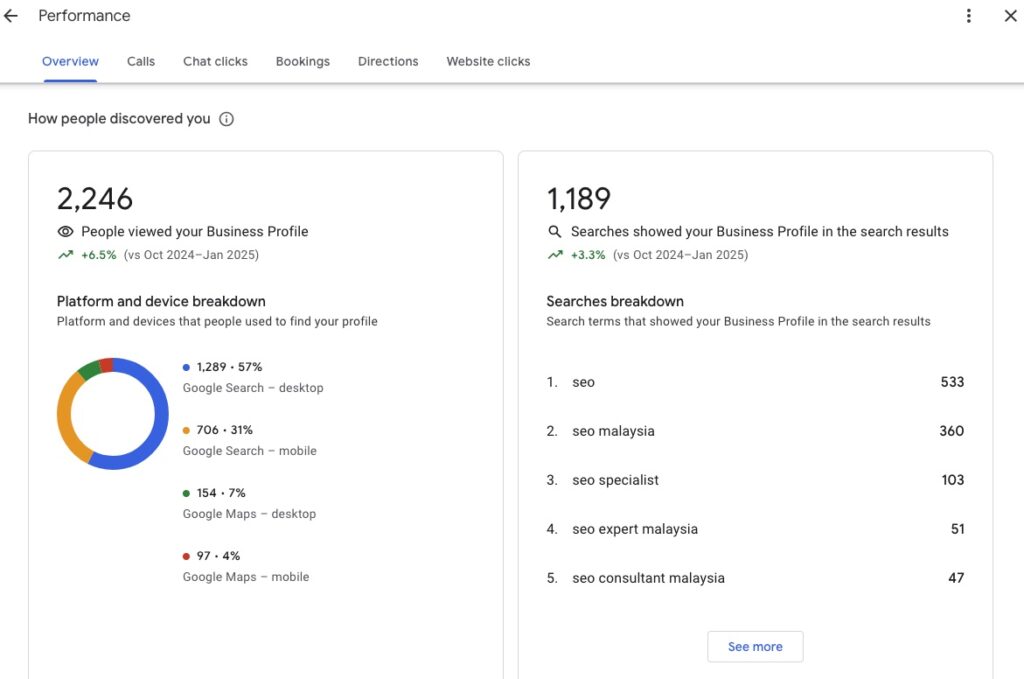
- Leverage GBP Insights: Google provides invaluable analytics within your GBP dashboard. Regularly review these insights to understand how customers are finding your listing (direct vs. discovery searches), their actions (calls, direction requests, website clicks), and popular search queries. This data is crucial for refining your strategy.
Expert Tips: Consider integrating a booking or appointment scheduling link directly into your GBP, if applicable. This streamlines the customer journey from discovery to conversion, a key aspect of revenue-focused SEO. For a deeper dive into maximizing your GBP, explore our Local SEO Service Page where we offer specialized GBP optimization services.
B. On-Page SEO for Local Targeting
While GBP handles your presence on Google Maps, your website remains critical for providing detailed information and converting leads. On-page SEO ensures your website content is optimized for local search queries.
Key On-Page Strategies:
- Local Keyword Research: Go beyond generic keywords. Utilize tools like Google Keyword Planner, Semrush, or Ubersuggest to identify hyper-local search terms. Think like your customer: “best nasi lemak in Kuala Lumpur,” “wedding photographer in Penang,” or “aircond service in Johor Bahru.” Incorporate these naturally into your content.
- Optimized Meta Elements and Headers: Your title tags, meta descriptions, and header tags (H1, H2, H3) should strategically include your target local keywords. For instance, a title tag might read: “Best Nasi Lemak in Kuala Lumpur – [Your Restaurant Name].”
- Embedded Google Maps: Integrate an interactive Google Map of your business location on your contact page and any relevant location-specific landing pages. This provides a clear visual cue to both users and search engines about your physical presence.
- Location-Specific Landing Pages: For businesses serving multiple areas or with multiple physical locations, create dedicated landing pages for each. Each page should feature unique, high-quality content tailored to that specific location, avoiding duplicate content issues. Include local testimonials, specific services offered in that area, and local landmarks.
- Technical SEO: Schema Markup: Implement LocalBusiness schema markup (using JSON-LD) on your website. This structured data helps search engines understand critical business information such as your location, operating hours, services, payment methods, and social profiles, leading to richer search results.
- Internal Linking Structure: Strategically link between your location pages and other relevant internal pages. This distributes link equity and helps users and search engines navigate your site effectively. For example, a main services page could link to specific location pages where that service is offered.
Expert Tips: Beyond standard location pages, consider creating blog content that answers common local questions or highlights local events relevant to your business. This builds topical authority and captures long-tail local search queries. For more in-depth content strategies, visit our Local SEO Hub Page.
C. Building Local Citations and NAP Consistency
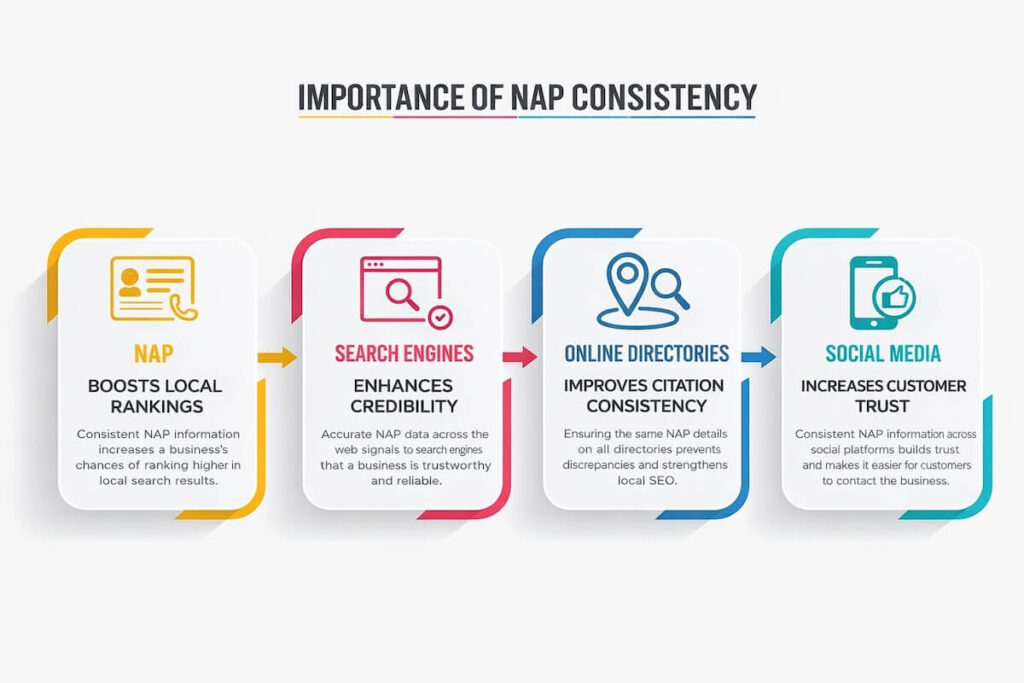
Local citations are online mentions of your business’s Name, Address, and Phone number (NAP), typically found on business directories, social media platforms, and other websites. Consistency across these citations is a critical trust signal for search engines.
Why Citations Matter:
- Verification: They help search engines verify your business’s existence and legitimacy.
- Ranking Factor: Consistent NAP information is a significant local ranking factor.
- Visibility: They increase your overall online footprint, making your business discoverable on more platforms.
Top Malaysian Business Directories to Prioritize:
- Malaysia Central
- Yellow Pages Malaysia
- Hotfrog Malaysia
- iProperty / Propwall (for real estate businesses)
- Foodpanda / Grabfood (for F&B businesses)
- Industry-specific directories (e.g., Wedding.com.my for wedding vendors, DoctorOnCall for healthcare professionals)
Critical Action: NAP Consistency: Ensure your Name, Address, and Phone number are identical across all online listings, including your website, GBP, and all directories. Even minor discrepancies (e.g., “Street” vs. “St.”) can confuse search engines and negatively impact your rankings. Inconsistent NAP is a leading cause of local ranking drops.
Tool Suggestion: Utilize citation management tools such as Moz Local, BrightLocal, or Yext. These platforms can help you audit your existing citations, identify inconsistencies, and streamline the process of building new, accurate listings at scale.
D. The Power of Customer Reviews
Customer reviews are powerful social proof and a vital local SEO ranking factor. They influence both search engine algorithms and potential customers’ purchasing decisions.
Strategies for Encouraging and Managing Reviews:
- Proactive Solicitation: Train your staff to politely ask satisfied customers for reviews. This can be done in person, via follow-up SMS messages, email campaigns, or QR codes on receipts or business cards that link directly to your review platforms.
- Respond to All Reviews: Engage with every review, positive or negative. Thank customers for positive feedback and address negative comments professionally and constructively. Pro Tip: When responding to positive reviews, subtly incorporate relevant keywords (e.g., “Thank you for visiting our Ipoh café! We’re glad you enjoyed our signature white coffee.”).
- Diversify Review Platforms: While Google reviews are paramount, encourage reviews on other relevant platforms like Facebook, industry-specific review sites, or local directories.
- Technical SEO: Review Schema Markup: Implement Review Schema markup on your website. This allows star ratings to appear directly in search engine results, significantly increasing your click-through rates.
- Handling Malicious Reviews: Understand Google’s guidelines for flagging and reporting fake or malicious reviews. Do not engage in arguments or retaliate; instead, follow the proper reporting procedures.
Expert Tips: Consider creating a dedicated “Reviews” page on your website that aggregates testimonials and links to your primary review platforms. This centralizes social proof and makes it easy for customers to leave feedback.
E. Local SEO for Multi-Location Businesses
Managing local SEO for businesses with multiple branches presents unique challenges and opportunities. A fragmented approach can dilute efforts, while a unified strategy can amplify local presence across all locations.
Key Strategies for Multi-Location Businesses:
- Separate GBP Listings: Each physical location must have its own distinct and fully optimized Google Business Profile. Ensure each GBP accurately reflects the unique details of that branch.
- Unique Location Pages: Create dedicated landing pages for each location on your website. Crucially, these pages must feature unique, non-duplicate content. Avoid simply changing the city name on a templated page. Instead, highlight location-specific services, local team members, unique selling propositions of that branch, and local testimonials.
- Consistent Management: Maintain NAP consistency, review management, and citation building across all locations. Tools mentioned earlier (Moz Local, BrightLocal) are particularly valuable for managing multiple listings efficiently.
- Location-Specific Contact Information: Use unique local phone numbers and addresses for each branch. Avoid using a single central call tracking number that might confuse Google about the true location of a business. If call tracking is essential, ensure it’s implemented in a way that doesn’t obscure local numbers from search engines.
- Strategic Internal Linking: Implement a clear internal linking structure that connects your main website to individual location pages, and also links between related location pages (e.g., “Visit our Penang branch” linked from the Kuala Lumpur page). This helps distribute authority and improves user navigation.
Expert Tips: For larger multi-location businesses, consider developing a localized content strategy for each branch. This could involve blog posts about local events in specific cities, partnerships with local influencers, or promotions tailored to regional preferences. This hyper-local approach can significantly deepen community engagement and search relevance.
Advanced Strategies for Revenue-Driven Local SEO
Once the fundamentals are in place, businesses can leverage more sophisticated tactics to further dominate local search and directly impact their bottom line.
A. Creating Hyper-Local Content
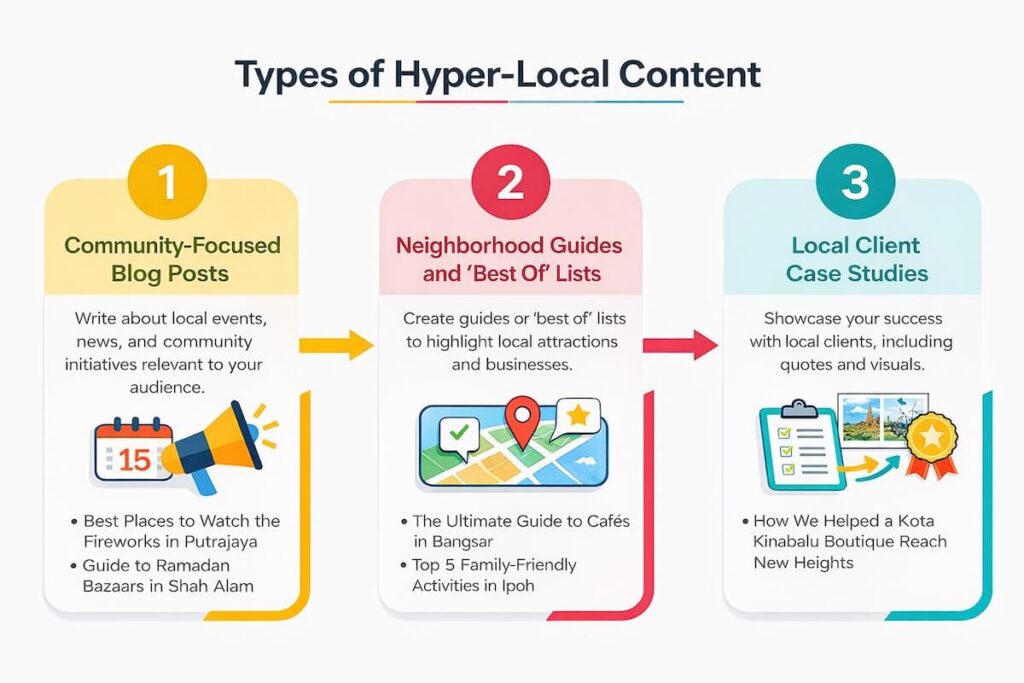
Hyper-local content goes beyond simply mentioning a city name; it delves into the nuances, culture, and specific interests of a local community. This type of content resonates deeply with local audiences and signals strong relevance to search engines.
Strategies for Hyper-Local Content Creation:
- Community-Focused Blog Posts: Write about local events, news, festivals, or community initiatives that are relevant to your business and target audience (e.g., “Best Places to Watch the Fireworks in Putrajaya,” “Guide to Ramadan Bazaars in Shah Alam”).
- Neighborhood Guides and “Best Of” Lists: Position your business as a local authority by creating comprehensive guides to specific neighborhoods or “best of” lists that include your business (e.g., “The Ultimate Guide to Cafés in Bangsar,” “Top 5 Family-Friendly Activities in Ipoh”).
- Local Client Case Studies: Showcase your success with local clients. Detail the challenges they faced, the solutions you provided, and the tangible results achieved. Include client quotes and, if possible, before-and-after visuals.
Expert Tips: Collaborate with other non-competing local businesses or community organizations to create joint content. This not only expands your reach but also provides opportunities for valuable local backlinks. For more innovative content ideas, explore our Local SEO Hub Page.
B. Local Link Building in Malaysia
Backlinks from authoritative and relevant local websites are powerful signals of trust and authority for search engines. For Malaysian businesses, local link building focuses on acquiring links from within the Malaysian digital ecosystem.
Effective Local Link Building Tactics:
- Sponsorships and Partnerships: Sponsor local events, charities, school programs, or community sports teams. This often results in a backlink from the organization’s website, along with positive brand exposure.
- Collaborate with Local Businesses: Partner with complementary local businesses for cross-promotional activities that can lead to reciprocal links (e.g., a wedding photographer linking to a bridal boutique, a restaurant linking to a local food blogger).
- Guest Posting on Malaysian Blogs: Identify authoritative Malaysian blogs, news sites, or industry publications (e.g., The Star, Malay Mail, Time Out Kuala Lumpur, Vulcan Post) that accept guest contributions. Offer to write high-quality, insightful articles that include a natural link back to your site.
- Local Resource Pages: Seek out opportunities to be listed on local resource pages, “best of” roundups, or directories curated by local influencers or community groups (e.g., “Best Restaurants in Penang” lists).
Expert Tips: Don’t overlook local universities or colleges. If your business offers internships, scholarships, or educational resources, you might be able to secure valuable .edu.my backlinks.
C. Leveraging Social Media for Local SEO
Social media, while not a direct ranking factor, plays a crucial supporting role in local SEO by enhancing visibility, driving engagement, and generating local signals.
Social Media Strategies for Local Impact:
- Location Tagging: Consistently use location tags on all your posts and stories across platforms like Instagram, Facebook, and TikTok. This helps your content appear in location-based searches and feeds.
- Targeted Social Ads: Utilize the precise targeting capabilities of social media advertising platforms to reach users within specific geographic areas around your business. This is highly effective for driving local awareness and foot traffic.
- Community Engagement: Actively participate in local Facebook Groups, engage with local influencers, and respond to comments and messages from your local audience. This builds community, fosters loyalty, and generates valuable local mentions.
- Encourage User-Generated Content (UGC): Run campaigns that encourage customers to check in at your location, use branded hashtags, or share photos/videos of their experience. UGC is authentic, builds trust, and provides fresh content for your social channels.
Expert Tips: Consider running localized contests or giveaways on social media to boost engagement and collect local leads. For example, a “Best of Kuala Lumpur” photo contest could generate significant local buzz.
D. Voice Search Optimization
The proliferation of smart speakers and mobile voice assistants (Google Assistant, Siri, Bixby) has made voice search a significant, albeit often overlooked, component of local SEO, particularly among Malaysian consumers who increasingly rely on hands-free search while driving or cooking.
Optimizing for Voice Search:
- Conversational Keywords: Voice queries are typically longer and more conversational than typed searches. Optimize for long-tail, natural language questions (e.g., “Where’s the best curry laksa near me?” instead of “curry laksa Kuala Lumpur”).
- FAQ Content: Create comprehensive FAQ sections on your website that directly answer common customer questions using natural language. This content is prime material for voice assistants to pull answers from.
- FAQ Schema Markup: Implement FAQ schema to explicitly tell search engines that your content provides answers to common questions, increasing the likelihood of appearing in voice search results and featured snippets.
- Local Context: Ensure your content provides clear local context. Voice searches often include implicit or explicit location cues, so your content should be able to answer questions like “What’s the nearest [service] to me?”
Expert Tips: Conduct voice search tests using popular assistants to see how your business appears for relevant queries. This hands-on approach can reveal optimization opportunities.
E. Video Content for Local SEO
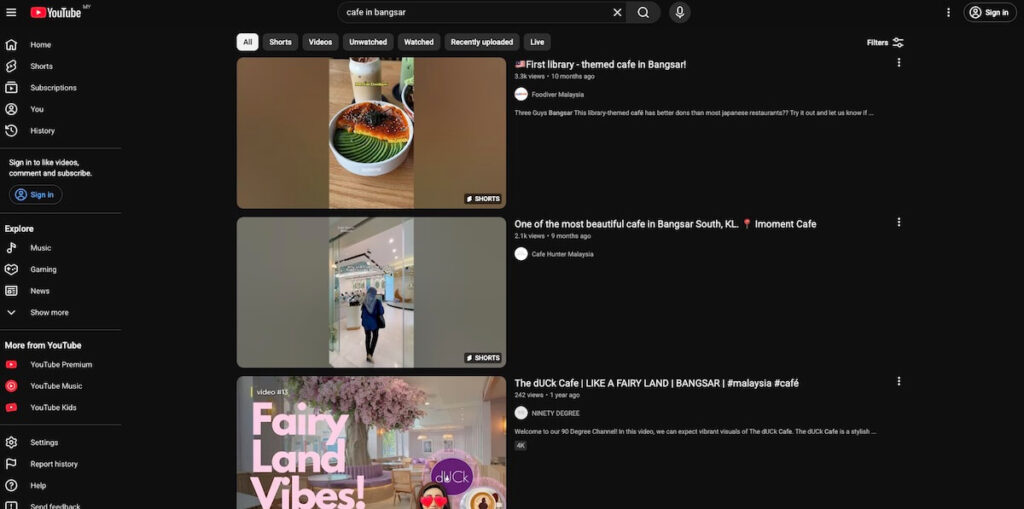
Video content is highly engaging and increasingly important for local SEO, especially with the rise of platforms like YouTube and TikTok as search engines in their own right. Videos can significantly increase dwell time on your site and provide rich local signals.
Strategies for Local Video Content:
- Location-Specific Videos: Create videos that showcase your business in its local context (e.g., “A Day in Ipoh Old Town with [Your Business Name],” “Behind the Scenes at Our Kuala Lumpur Studio,” “Meet the Team at Our Penang Clinic”).
- Embed Videos on Location Pages: Integrate these videos directly onto your relevant location pages. This not only enhances user experience but also increases dwell time, a positive signal for search engines.
- YouTube Optimization: Upload your videos to YouTube, ensuring titles, descriptions, and tags include relevant local keywords. YouTube is the world’s second-largest search engine, offering a massive opportunity for local discovery.
- Google Business Profile Videos: Don’t forget to upload short, engaging videos directly to your GBP. These can significantly boost engagement and visibility.
Expert Tips: Consider creating short, engaging video testimonials from local customers. These combine the power of video with social proof, making them highly effective for conversion.
F. Local Competitor Analysis: Learning from the Market
Understanding your local competitors’ SEO strategies is crucial for identifying opportunities and staying ahead. A thorough analysis can reveal their strengths, weaknesses, and areas where you can gain a competitive edge.
Steps for Local Competitor Analysis:
- Identify Top Local Competitors: Use tools like Semrush or Ahrefs to identify businesses ranking for your target local keywords. Also, manually search on Google Maps and local search results.
- Analyze GBP Optimization: Scrutinize their Google Business Profiles. How complete are their listings? What kind of photos do they use? How do they engage with Q&A and reviews? Are they using GBP posts effectively?
- Review Local Content Strategy: Examine their websites for location-specific landing pages, blog content, and local keyword usage. What topics do they cover? How do they integrate local context?
- Examine Backlink Profiles and Citations: Use SEO tools to analyze their backlink sources and citation profiles. Identify high-quality local links they’ve acquired and the directories they’re listed on.
- Benchmarking and Rank Tracking: Use tools like BrightLocal to benchmark your performance against competitors and track local rankings for key terms. This provides a clear picture of your competitive position.
Expert Tips: Perform a gap analysis. Identify keywords they rank for that you don’t, locations they target that you’ve overlooked, or content formats they’re not utilizing. This reveals actionable opportunities for your own strategy.
G. Industry-Specific Local SEO Strategies
Local SEO is not a one-size-fits-all solution. Different industries have unique requirements and opportunities.
- Brick-and-Mortar (Retail, F&B): Focus heavily on GBP optimization, driving walk-in traffic, promoting local offers, and showcasing high-quality product/food photography. Emphasize “near me” searches and ease of access.
- Service-Area Businesses (Plumbers, Electricians, Photographers, Tutors): Optimize for service areas rather than a physical storefront. Utilize radius targeting in GBP, implement call tracking for lead attribution, and prominently display portfolios or service galleries. Testimonials are paramount.
- Professional Services (Lawyers, Doctors, Consultants): Emphasize E-E-A-T (Experience, Expertise, Authoritativeness, Trustworthiness). Focus on educational content, robust review management, and highlighting professional association memberships and certifications.
- Healthcare/Wellness: Strict adherence to advertising guidelines (e.g., Ministry of Health Malaysia). Focus on patient reviews, local trust signals (clinic registrations, licenses), and clear, empathetic communication.
- Accommodation (Hotels, Homestays): Integrate with Online Travel Agencies (OTAs) like Agoda and Booking.com. Create rich content around local attractions, showcase amenities with high-quality photo and video galleries, and manage reviews diligently.
Expert Tips: Research industry-specific local search trends and niche directories in Malaysia. For example, a restaurant might focus on food review blogs, while a legal firm might target legal directories.
H. Integrating Local SEO with E-Commerce
For businesses with both a physical presence and an online store, integrating local SEO with e-commerce strategies can create a powerful synergy, driving both online and offline sales.
Integration Strategies:
- Local Keyword Optimization for Products: Optimize product pages with local keywords (e.g., “buy roti kaya in Johor Bahru,” “delivery of fresh flowers in Petaling Jaya”). This captures local searchers looking to purchase specific items.
- “Click and Collect” / “Same-Day Delivery” Options: Clearly promote local pickup or same-day delivery options for local customers. This caters to the immediate needs often associated with local searches.
- Local Inventory Ads and GBP Product Listings: Leverage Google’s Local Inventory Ads to show local shoppers that products are available nearby. Utilize the product showcase feature within your GBP to display products directly in search results.
- Encourage Local Pickup Reviews: Encourage customers who use local pickup to leave reviews, specifically mentioning their positive experience with the local service.
- Schema Markup for E-commerce: Implement LocalBusiness schema along with Product and Offer schema to provide comprehensive information about your products, pricing, and local availability to search engines.
Expert Tips: Create localized promotions or discounts specifically for online orders with local pickup. This incentivizes local customers to engage with your e-commerce platform while reinforcing your local presence.
I. Dominating “Near Me” Searches in Malaysia
“Near me” searches signify high intent and immediacy. When a user searches for “cafe near me” or “dentist near me,” they are typically looking to make a decision or visit a business very soon. Dominating these searches is crucial for revenue generation.
Strategies for “Near Me” Dominance:
- GBP Proximity Optimization: Ensure your GBP is fully optimized, actively managed, and has accurate location information. Google prioritizes businesses that are physically close to the searcher for “near me” queries.
- Natural Language in Content: Integrate natural language phrases like “cafe near KLCC,” “dentist near Sunway Pyramid,” or “24-hour clinic near Mont Kiara” into your website content, especially on location pages and FAQs.
- Encourage Check-ins and Location Tags: Promote customer check-ins and location tagging on social media platforms. These user-generated signals contribute to your local relevance.
- Content Around Local Landmarks: Create content that references well-known local landmarks or popular areas. This helps associate your business with specific geographic points of interest.
Expert Tips: Consider running localized Google Ads campaigns specifically targeting “near me” keywords. This can provide an immediate boost in visibility while your organic efforts mature.
J. Seasonal and Crisis Management for Local SEO
Malaysian businesses operate within a dynamic environment, influenced by diverse cultural festivals and occasional unforeseen events. Proactive management of your local SEO during these times is essential.
Strategies for Seasonal and Crisis Management:
- Update GBP Hours: Crucially, update your GBP operating hours for public holidays and festive seasons (e.g., Hari Raya Aidilfitri, Chinese New Year, Deepavali, Christmas, Wesak Day). Google allows you to set special hours in advance.
- Holiday-Specific Content and Offers: Create dedicated content, promotions, or landing pages for major holidays. This captures seasonal search intent and drives traffic (e.g., “Ramadan Bazaar Guide,” “Chinese New Year Promotions”).
- Manage Reviews During Peak Periods: Be extra vigilant in managing reviews during busy seasons. Increased customer volume often means increased review activity, both positive and negative.
- Communicate Changes Transparently: In times of crisis (e.g., temporary closures due to MCO-style restrictions, renovations, natural disasters), use GBP posts, website banners, and social media to communicate changes to your operating status, hours, or services immediately and clearly.
Expert Tips: Develop a pre-planned content calendar for major Malaysian holidays. This ensures you’re prepared with relevant offers and messaging well in advance.
K. Harnessing User-Generated Content (UGC) for Local Visibility
User-Generated Content (UGC) is a powerful, authentic, and cost-effective asset for local SEO. It builds trust, provides fresh content, and signals genuine local engagement to search engines.
Strategies for Leveraging UGC:
- Encourage Sharing: Actively encourage customers to share photos and videos of their experience with your business, using location tags and branded hashtags.
- Repost and Embed: Repost compelling UGC on your social media channels (with permission) and embed it on relevant pages of your website. This adds authenticity and visual appeal.
- Contests and Campaigns: Run UGC contests or hashtag campaigns (e.g., “#MyFavouriteCafeInPenang,” “#KLRestaurantWeek”). Offer incentives for participation to boost engagement.
- Authenticity and Trust: UGC provides fresh, authentic content that signals relevance and trust to both human users and search engine algorithms. It’s a powerful form of social proof.
Expert Tips: Create a dedicated section on your website or social media highlighting customer stories and UGC. This not only showcases positive experiences but also encourages others to contribute.
The Future is Here: AI and GEO for Malaysian Businesses
The advent of Artificial Intelligence is fundamentally reshaping the search landscape. For Malaysian businesses, understanding and adapting to Generative Engine Optimization (GEO) is no longer a futuristic concept but a present-day necessity.
A. Understanding Generative Engine Optimization (GEO)
GEO is the practice of optimizing your online presence so that AI-powered search platforms (like Google’s AI Overviews, Bing Chat, and Perplexity AI) cite, recommend, or mention your brand when users seek answers. It represents a shift from optimizing for clicks to optimizing for citations and mentions within AI-generated summaries.
Key Aspects of GEO:
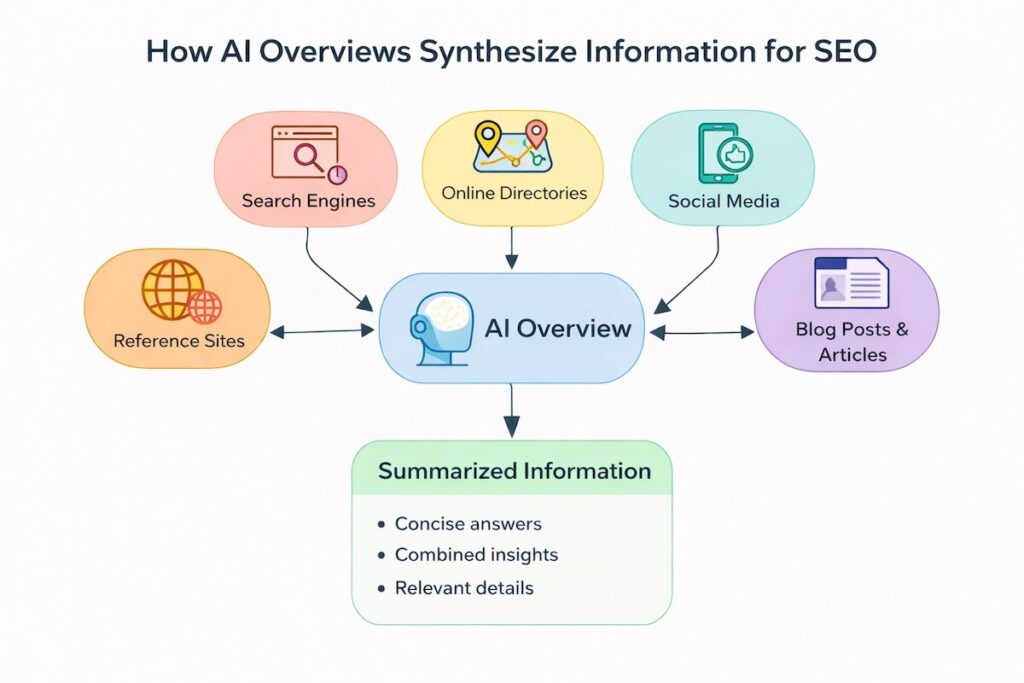
- AI-Powered Search: AI models now synthesize information from multiple sources to provide direct answers, often reducing the need for users to click through to individual websites. This is particularly evident in Google’s AI Overviews (formerly Search Generative Experience or SGE).
- Impact on Local Search: For local businesses, AI Overviews can summarize information about nearby services, products, or attractions, directly influencing user decisions. Being cited by AI means your business is deemed authoritative and relevant enough to be included in these summaries.
- Entity Recognition: AI models are highly adept at understanding entities – specific people, places, or things. Optimizing for GEO involves helping AI recognize your business as a trusted entity for specific queries (e.g., “best wedding photographer in Penang” or “most reliable car workshop in Shah Alam”).
- The New Ranking Frontier: Being cited by AI is rapidly becoming the new frontier for search visibility. Businesses that master GEO will gain a significant competitive advantage.
B. Practical GEO Strategies for Local Businesses
Adapting to GEO requires a nuanced approach that complements traditional SEO efforts.
- Structuring Content for Extractability: AI models excel at extracting concise, factual information. Structure your content using clear, self-contained paragraphs, bullet points, numbered lists, and tables. Each piece of information should be easily digestible and quotable by an AI. Avoid overly verbose or ambiguous language.
- Creating Q&A Content: Develop comprehensive FAQ sections that directly answer common customer questions. These are prime candidates for AI citations, as AI models are designed to provide direct answers to user queries.
- Building Authority Signals Across Platforms: AI evaluates authority not just from your website, but from your entire digital footprint. This means building trust and authority across social media, industry forums, news outlets, and other relevant platforms. The more your brand is mentioned positively and authoritatively across the web, the more likely AI is to cite you.
- Securing Local Entity Mentions: Proactively seek mentions of your business as a trusted entity in authoritative local sources. This includes local news outlets, government websites, industry associations, and partner sites. These mentions act as strong signals to AI about your local relevance and credibility.
- Leveraging Structured Data: Continue to implement and expand your use of schema markup (FAQ, HowTo, LocalBusiness, Review, Event). Structured data provides explicit signals to AI about the context and meaning of your content, making it easier for models to understand and cite.
Expert Tips: Regularly audit your content for clarity and conciseness. Imagine an AI trying to summarize your key points – are they easily identifiable? If not, refine your writing style.
C. Future Trends in Local SEO for Malaysia
The digital landscape is constantly evolving. Malaysian businesses must stay abreast of emerging trends to maintain their competitive edge.
- Visual Search: The growing sophistication of tools like Google Lens, Pinterest Lens, and TikTok’s visual search means users can discover local businesses by simply snapping a photo. Optimizing product images, ensuring high-quality visuals, and leveraging visual platforms will become increasingly important.
- Augmented Reality (AR) for Local Businesses: AR applications offer immersive experiences, from virtual store tours and “try before you buy” features to AR-powered navigation within physical spaces. Early adopters in Malaysia can gain a significant advantage.
- Hyper-Personalization: Search results will become even more tailored to individual user behavior, location history, and preferences. This emphasizes the need for comprehensive data collection (with user consent) and dynamic content delivery.
- Video-First Search: The dominance of video content continues to grow. Platforms like YouTube and TikTok are increasingly used for product research and local discovery. Businesses must invest in high-quality, localized video content.
Expert Tips: Experiment with new technologies. Even small-scale AR or visual search initiatives can provide valuable insights and position your brand as an innovator.
Measuring Success and Driving Revenue
Local SEO is an investment, and like any investment, its success must be measured against tangible business outcomes. A revenue-focused approach means tracking metrics that directly correlate with profitability.
A. Key Metrics to Track
- Local Search Rankings: Monitor your rankings for primary local keywords using specialized SEO tools (Semrush, Ahrefs, BrightLocal, AccuRanker). Track your position in the Google Map Pack and organic local results.
- Google Business Profile Insights: This is a treasure trove of data. Monitor:
- Views: How many times your listing appeared.
- Searches: Differentiate between direct searches (users searching for your business name) and discovery searches (users searching for a category or service and finding your business).
- Clicks: Track clicks to your website, calls to your business, and requests for directions.
- Photo Views: Understand which visuals resonate most with your audience.
- Website Traffic from Local Sources: Use Google Analytics 4 (GA4) to analyze traffic originating from your location pages, local keywords, and referrals from your GBP. Set up custom events in GA4 to track specific lead-generating actions like form submissions, click-to-call buttons, “get directions” clicks, and chat interactions.
- Offline Conversion Tracking: This is often overlooked but crucial. Implement systems to ask new customers how they found your business (e.g., brief phone surveys, in-person prompts, QR code feedback forms). This provides direct attribution for your local SEO efforts.
Review Metrics: Track the volume of new reviews, your average star rating, and your response rates. Consistent positive reviews and prompt responses are strong indicators of customer satisfaction and local SEO health.
B. Connecting SEO Efforts to the Bottom Line
The ultimate goal of revenue-focused local SEO is to drive profitability. This requires a clear understanding of how your SEO activities translate into financial gains.
- Calculating ROI: Track the number of leads generated through local SEO (calls, form fills, direction requests) and estimate the conversion rate of these leads into paying customers. Combine this with the average customer lifetime value to calculate the return on your local SEO investment.
- Data-Driven Adjustments: Use your analytics to identify which local SEO strategies are yielding the best results. For instance, if a particular location page is driving significantly more conversions, analyze its elements and replicate best practices across other pages.
Simplified Reporting: Create a concise monthly dashboard (using tools like Google Looker Studio or even Excel) to present key metrics to stakeholders. Focus on insights and their business impact, rather than just raw numbers.
C. Building Local SEO Reports That Impress Clients (For Agencies)
For agencies, effective reporting is key to demonstrating value and retaining clients. Reports should be insightful, transparent, and directly link SEO efforts to client business goals.
- Comprehensive Monthly Reports: Include a summary of local rankings, website traffic from local sources, leads generated, new citations built, reviews gained, and a brief analysis of competitor movements.
- Tie Metrics to Business Goals: Clearly articulate how local SEO metrics contribute to the client’s overarching business objectives (e.g., “Increased phone calls by 20% leading to an estimated X new bookings”).
- Automated Reporting Tools: Leverage tools like Google Looker Studio, BrightLocal, Semrush Reports, or AgencyAnalytics to automate data collection and report generation, freeing up time for analysis.
- Client-Centric Presentation: Present data in a clear, non-technical manner. Focus on actionable insights, progress towards goals, and future recommendations, rather than overwhelming clients with raw data.
Building E-E-A-T for Local SEO Success in Malaysia
E-E-A-T (Experience, Expertise, Authoritativeness, Trustworthiness) is a critical concept in modern SEO, and its importance is amplified in local search, especially with the rise of AI. Google prioritizes content from sources that demonstrate strong E-E-A-T, and AI models are trained to identify and cite authoritative information.
- Experience: Showcase real-world experience through detailed case studies, before-and-after results, and authentic client testimonials from Malaysian businesses. Highlight the practical application of your services or products.
- Expertise: Clearly communicate the qualifications, certifications (e.g., Google Partner, industry-specific accreditations), and professional affiliations of your team. Feature author bios for blog posts and articles, emphasizing their expertise.
- Authoritativeness: Secure backlinks from authoritative Malaysian domains (e.g., .edu.my, .gov.my, major news outlets like The Star or Malay Mail). Seek opportunities to be featured in industry publications, speak at local events, or contribute to local community initiatives.
- Trustworthiness: Display trust badges (e.g., SSM registration, MDEC status for tech companies, KKM license for healthcare providers). Ensure your website is secure (HTTPS), has clear privacy policies, and transparent contact information (physical address, phone, email).
- “About Us” Optimization: Your “About Us” page is a prime location to build E-E-A-T. Clearly articulate your company’s mission, values, history, team members, and physical presence in Malaysia. This humanizes your brand and builds trust.
Expert Tips: Actively seek opportunities for your business leaders or experts to be interviewed by local media or featured in industry podcasts. These external validations significantly boost your authoritativeness.
Technical Local SEO Audit: Diagnosing Issues
A regular technical audit is essential to ensure your local SEO efforts are not hampered by underlying website issues. This involves a systematic review of your site’s technical health from a local search perspective.
- Crawl Errors and Indexation: Use Google Search Console to identify and fix any crawl errors or indexation issues on your location pages. Ensure all relevant pages are discoverable and indexed by Google.
- Mobile-Friendliness and Page Speed: Given Malaysia’s mobile-first landscape, your website must be fast and responsive on all devices. Use Google PageSpeed Insights and GTmetrix to identify and resolve performance bottlenecks.
- Structured Data Validation: Verify that your implemented schema markup (LocalBusiness, Review, Product, FAQ) is correctly formatted and free of errors using Google’s Rich Results Test. Correct implementation ensures rich snippets appear in search results.
- NAP Consistency Audit: Conduct a thorough audit of your NAP information across your website and all online citations. Tools like BrightLocal can assist in identifying inconsistencies that need correction.
- Duplicate Content Issues: For multi-location businesses, carefully check for duplicate content across location pages. Each page should offer unique, valuable content to avoid penalties.
- Local Search Performance Monitoring: Utilize Google Search Console’s “Performance” report, filtered by country and city, to monitor how your business is performing for local search queries. This helps identify areas for improvement.
Expert Tips: Consider implementing a content delivery network (CDN) to improve page load times for users across different regions of Malaysia, further enhancing user experience and SEO performance.
Common Local SEO Myths Debunked
Misconceptions about local SEO can lead to wasted effort and missed opportunities. Here, we debunk some prevalent myths.
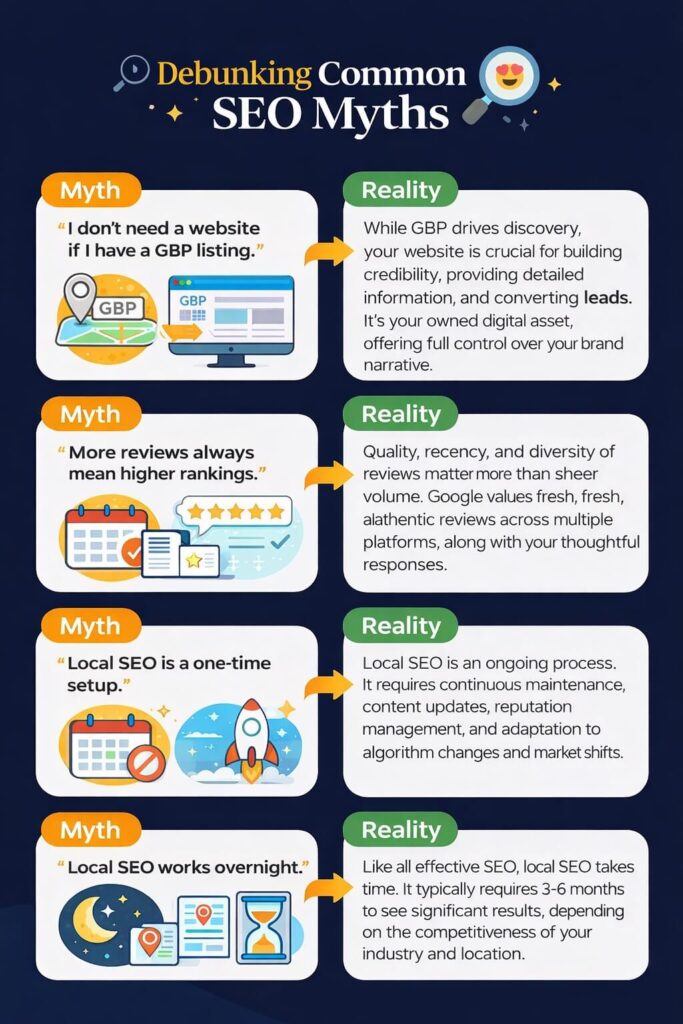
- Myth 1: “I don’t need a website if I have a GBP listing.”
- Reality: While GBP drives discovery, your website is crucial for building credibility, providing detailed information, and converting leads. It’s your owned digital asset, offering full control over your brand narrative.
- Myth 2: “More reviews always mean higher rankings.”
- Reality: Quality, recency, and diversity of reviews matter more than sheer volume. Google values fresh, authentic reviews across multiple platforms, along with your thoughtful responses.
- Myth 3: “Local SEO is a one-time setup.”
- Reality: Local SEO is an ongoing process. It requires continuous maintenance, content updates, reputation management, and adaptation to algorithm changes and market shifts.
- Myth 4: “I can use the same content for all my location pages.”
- Reality: Duplicate content can harm your rankings. Each location page needs unique, valuable content that speaks to the specific needs and characteristics of that area.
- Myth 5: “Local SEO works overnight.”
- Reality: Like all effective SEO, local SEO takes time. It typically requires 3-6 months to see significant results, depending on the competitiveness of your industry and location.
- Myth 6: “Google My Business is the only thing that matters.”
Reality: GBP is foundational, but it’s part of a larger ecosystem. Citations, on-page SEO, local link building, and reviews all work synergistically to boost your local visibility.
Essential Local SEO Tools for Malaysian Businesses
Leveraging the right tools can streamline your local SEO efforts and provide invaluable insights.
| Category | Tools |
| Rank Tracking | Semrush, Ahrefs, BrightLocal, AccuRanker |
| GBP Management | Google Business Profile dashboard, Local Viking, PosterMyWall (for posts) |
| Citation Building & Audit | BrightLocal, Moz Local, Yext, Whitespark |
| Review Management | ReviewTrackers, Podium, Grade.us |
| Schema Markup | Google Structured Data Markup Helper, Merkle Schema Generator, Rank Math (WordPress plugin) |
| Local Keyword Research | Google Keyword Planner, Ubersuggest, AnswerThePublic, AlsoAsked |
| Competitor Analysis | Semrush, Ahrefs, SpyFu |
| Analytics & Reporting | Google Analytics 4, Google Search Console, Google Looker Studio |
| Page Speed Testing | Google PageSpeed Insights, GTmetrix |
Expert Tips: For Malaysian businesses, prioritize tools that offer strong local data for Southeast Asia or allow for granular geographic targeting in their analysis. This ensures the insights are relevant to your specific market.
Local SEO Success Stories
Real-world examples underscore the power of a well-executed local SEO strategy.
Case Study 1: Phuket Café Increases Foot Traffic by 120%
- Client: A Pet friendly café in Phuket, Thailand.
- Challenge: Despite a prime location, the café struggled with low visibility in local search results and inconsistent Google Business Profile optimization.
- Actions Taken:
- Comprehensive GBP optimization, including high-quality photos, detailed service descriptions, and weekly engagement posts.
- Thorough citation cleanup and building across 15+ relevant Thailand business directories.
- Creation of hyper-local content, such as a blog post titled “Best Brunch Spots in Phuket Town.”
- Implementation of a review generation campaign, resulting in over 30 new 5-star reviews in three months.
- Results (3 months):
- 120% increase in direction requests to the café.
- 60%+ increase in website clicks originating from their GBP listing.
- Achieved #1 ranking for “best pet friendly Phuket” in the local pack.
Conclusion: Your Path to Local Dominance
The digital landscape for Malaysian businesses is dynamic, yet the principles of effective local SEO, amplified by the power of AI and GEO, offer an unparalleled opportunity for growth. By mastering the fundamentals, embracing advanced strategies, and continuously adapting to emerging trends, your business can not only achieve superior local visibility but also translate that visibility directly into increased revenue.
Remember, local SEO is an ongoing journey, not a destination. Consistent effort, data-driven decisions, and a commitment to providing exceptional customer experiences both online and offline will be your greatest assets.
Ready to transform your local presence and drive tangible revenue?
- Contact us for a free consultation to discuss a tailored local SEO strategy for your Malaysian business.
- Want to assess your current online health? Get a free SEO audit today and uncover immediate opportunities for improvement.
- See our proven track record: Discover how we helped SGJBTaxis increase local leads by 200%—read the full case study on our website.
By taking these decisive steps, your business can not only survive but thrive in Malaysia’s competitive local market, leveraging the full potential of local and revenue-focused SEO.