Search behaviour has shifted faster in the last two years than at almost any point in the history of SEO. Users are no longer just typing queries and scanning ten blue links. They are asking questions and expecting direct, authoritative answers from AI systems, whether that is Google’s AI Overviews, ChatGPT, Perplexity, or Gemini. Two terms have emerged to describe how brands should respond to this shift: Answer Engine Optimisation (AEO) and Generative Engine Optimisation (GEO). These terms are often used interchangeably, but they are not the same thing. Understanding the distinction between AEO and GEO, and knowing which one your business should be investing in, can mean the difference between staying visible in search and quietly disappearing from the conversation.
Key takeaways
- AEO focuses on getting your content selected as a direct answer in structured search features like featured snippets and voice search results
- GEO focuses on getting your brand cited or referenced inside AI-generated responses from systems like ChatGPT, Perplexity and Google’s AI Overviews
- The two disciplines overlap significantly but require different tactical approaches to content structure and authority signals
- Most mid-market and enterprise businesses in Malaysia need both, but the right entry point depends on your current SEO maturity and where your audience is already searching
- Neither AEO nor GEO replaces foundational SEO, both depend on it working correctly first
Answer Engine Optimisation is the practice of structuring your content so that search engines can extract it and present it as a direct answer, without requiring the user to click through to your website.
The concept predates generative AI by several years. It grew out of Google’s push toward featured snippets, knowledge panels, rich results and eventually voice search. When someone asks Google “what is the capital of Malaysia” and the answer appears at the top of the page without a single click, that is an answer engine at work.
AEO asks a specific question: how do you write and structure content so that it gets selected as that answer?
The core mechanics of AEO
The tactical foundations of AEO are closely tied to how Google parses and extracts content:
Structured data and schema markup. Adding FAQ schema, HowTo schema, Article schema and other structured markup signals to Google exactly what type of content sits on a page. This increases the probability that the content appears in rich results.
Clear question-and-answer formatting. Pages that ask a question in a heading and answer it concisely in the paragraph directly below that heading are far more likely to be pulled into featured snippets. The answer should ideally sit within the first 40 to 60 words beneath the heading.
Concise, factual language. Answer engines prefer content that is definitive rather than hedged. “X is Y” performs better than “X can sometimes be thought of as Y depending on context.”
Voice search compatibility. Voice queries are typically longer and more conversational. Content optimised for AEO often mirrors this by targeting question-based keywords directly: “what is,” “how does,” “why does,” “when should.”
AEO is a mature discipline. The signals that drive featured snippet inclusion are reasonably well-documented, and the relationship between strong on-page structure, technical SEO hygiene and answer engine visibility is well-established.
What is Generative Engine Optimisation (GEO)?
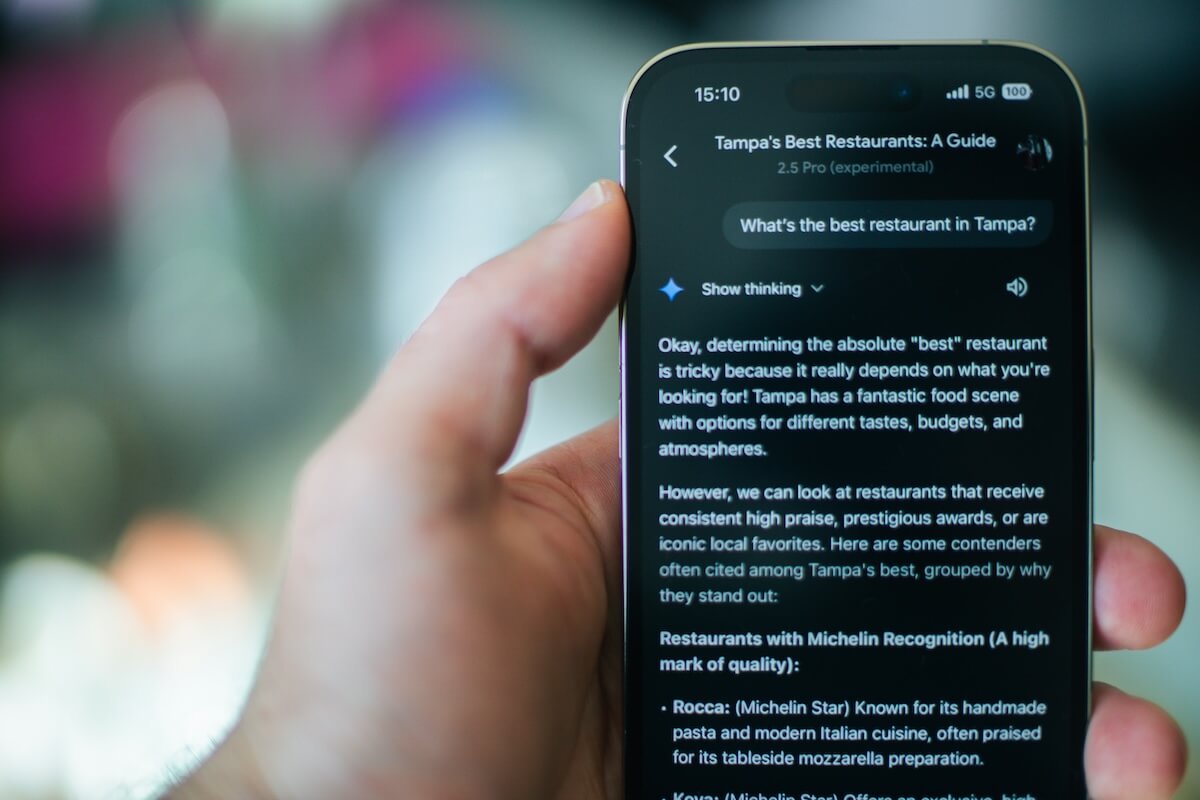
Generative Engine Optimisation is newer and considerably less predictable. It refers to the practice of optimising your content and brand presence so that large language models (LLMs) and generative AI systems reference, cite or recommend your brand in their responses.
When someone asks ChatGPT “which SEO agency should I use in Malaysia” or asks Perplexity “what is the best way to fix crawl budget issues,” and your brand or your content appears in that response, that is GEO working in your favour.
The fundamental difference from AEO is the mechanism. AEO works through extraction. Google identifies a passage in your content and lifts it into a search result. GEO works through synthesis. The AI model has processed vast amounts of web content during training or retrieval, and your content either did or did not make it into its understanding of a topic.
Why GEO is more complex than AEO
GEO operates across a wider and less transparent ecosystem. You are not optimising for a single algorithm with documented ranking factors. You are optimising for multiple AI systems, each with its own training data, retrieval mechanisms and citation preferences.
The systems involved include:
- Google AI Overviews (formerly Search Generative Experience), which pulls from indexed web content in real time
- ChatGPT with Browse and ChatGPT without Browse, where the latter relies on training data and the former performs live web lookups
- Perplexity AI, which retrieves live sources and cites them prominently
- Microsoft Copilot, which is integrated into Bing search results
- Gemini Advanced, which combines retrieval and generation
Each system weights authority, freshness and content structure differently. There is no single GEO playbook the way there is a reasonably established AEO playbook.
AEO vs. GEO: Where they overlap and where they diverge
Understanding where these two disciplines share territory and where they split is the most useful frame for planning your content strategy.
Where they overlap
Both AEO and GEO reward the same foundational qualities in content:
Topical authority. Both answer engines and generative AI systems favour sources that demonstrate deep, consistent expertise on a subject. A site that covers a topic comprehensively, across multiple well-structured pages, is more likely to be selected as an answer or cited in a generated response.
E-E-A-T signals. Experience, expertise, authoritativeness and trustworthiness remain relevant to both. Author credentials, citations to primary sources and original data all contribute to credibility.
Technical accessibility. If your content cannot be crawled and indexed, neither AEO nor GEO can help you. You need clean site architecture, fast load times and proper JavaScript rendering across both disciplines.
Structured, readable content. Both systems prefer content that is clearly organised, uses logical heading hierarchies and answers questions directly rather than burying answers in marketing copy.
Understanding E-E-A-T and content quality impact on AI content.
Where they diverge
The divergence becomes clear when you look at the specific optimisation levers each discipline uses.
| Dimension | AEO | GEO |
| Primary target | Google featured snippets, voice search, rich results | ChatGPT, Perplexity, Google AI Overviews, Copilot |
| Mechanism | Content extraction from indexed pages | Content synthesis from training data and live retrieval |
| Key signals | Schema markup, question-answer structure, snippet formatting | Brand citations, high-authority backlinks, content coverage breadth |
| Measurability | Trackable via GSC featured snippet data | Difficult to measure; requires AI output monitoring |
| Maturity | Established (10+ years of documented best practices) | Emerging (minimal peer-reviewed research, rapidly evolving) |
| Time to impact | Weeks to months with technical changes | Months to years for training data influence; faster for retrieval-based systems |
The clearest divergence is in authority building. GEO places considerably more weight on your brand being referenced across the web, not just on your own site. When an LLM encounters a brand name mentioned positively across dozens of credible, independent sources, that brand is more likely to appear in generated responses about that topic. This is why digital PR and unlinked brand mentions have taken on new SEO significance in a GEO context.
Which does your business actually need?
The honest answer is that most businesses should be investing in both, because the underlying requirements overlap significantly. But the sequencing matters, and the entry point depends on where you are right now.
If your SEO foundations are not solid, start there first
Neither AEO nor GEO will generate meaningful returns if your site has significant technical issues. Crawl errors, slow Core Web Vitals, thin or duplicate content, and a weak backlink profile will undermine both disciplines.
Before asking “should I optimise for AEO or GEO,” the more urgent question is often “is my site actually indexable and authoritative enough to compete in either.”
Get your free site audit and technical health check with us
When AEO should be your priority
AEO deserves primary attention when:
- You are targeting informational and question-based keywords where featured snippets already appear in search results
- Your audience still predominantly uses Google search rather than standalone AI tools
- You have content that answers specific questions but is not yet structured for extraction
- You are in an industry where voice search plays a meaningful role (local services, automotive, insurance)
For most Malaysian businesses at the SME to mid-market stage, AEO is the more immediately actionable investment. The feedback loop is tighter, the measurement tools are more mature, and wins tend to compound with standard SEO improvements.
When GEO should be part of your strategy
GEO becomes a strategic priority when:
- Your audience includes early adopters who use tools like Perplexity, ChatGPT or Gemini as research assistants
- You are in a B2B space where buying decisions involve research across multiple sources, including AI tools
- You are building topical authority in a space where you want to become the referenced expert, not just rank on page one
- You have a content and PR budget that allows you to invest in brand mentions and digital authority building beyond your own site
For growth-stage and enterprise clients operating in competitive sectors like SaaS, insurance and automotive in Malaysia, GEO is an increasingly important layer of a broader search visibility strategy. It is not yet a replacement for anything, but overlooking it means competitors who are building AI-era authority now will capture ground you cannot easily reclaim later.
A practical framework for getting started
Rather than treating AEO and GEO as competing programmes, the most effective approach is to treat them as layers built on the same foundation.
Layer 1: Technical SEO. Ensure the site is crawlable, fast, mobile-optimised and free of indexing issues. This is a prerequisite for everything else.
Layer 2: Content quality and topical coverage. Build comprehensive, well-structured content that demonstrates genuine expertise on your core topics. This is the shared fuel for both AEO and GEO.
Layer 3: AEO-specific optimisation. Add schema markup, refine heading and paragraph structure for snippet extraction, target question-based keywords with direct answers.
Layer 4: GEO-specific authority building. Invest in digital PR, earn citations on high-authority external sites, ensure your brand is consistently referenced in relevant industry conversations across the web.
Layer 5: Monitor and iterate. Track featured snippet performance in Google Search Console, and separately monitor how your brand appears in AI-generated responses across Perplexity, ChatGPT and AI Overviews.
Frequently asked questions
Is AEO just another name for featured snippet optimisation? Not entirely. Featured snippets are one output of AEO, but the discipline also covers voice search answers, knowledge panel data, rich results and any context where search engines present answers directly rather than lists of links. AEO is the broader strategic approach, featured snippets are one specific feature it targets.
Does optimising for GEO actually work, given how opaque AI systems are? Content quality, citation frequency and topical authority are measurable contributors to AI citation rates. It is not fully transparent, but it is not random either. Brands with strong digital PR coverage and comprehensive topical content appear more frequently in AI-generated responses.
Can a small or medium business in Malaysia compete in GEO, or is it only for enterprise brands? GEO is not exclusively for large brands, but it does reward the same assets that tend to favour established players: broad content coverage, credible backlinks and consistent external mentions. That said, highly niche expertise can be a significant advantage. A specialist local business that publishes genuinely authoritative content on a narrow topic can outperform larger, more generic competitors in AI-generated responses.
Does GEO affect Google AI Overviews specifically, or only third-party AI tools? Both. Google AI Overviews use a retrieval-augmented generation approach, meaning they pull from indexed web content in real time. Strong content quality and technical SEO do influence whether your pages are selected as sources. Third-party tools like Perplexity also retrieve live content, while tools like ChatGPT without Browse rely on training data, which is a slower and less direct optimisation path.
Should my content strategy change significantly to account for AEO and GEO? The changes are incremental. The core principles of writing clear, accurate, well-structured content for a specific audience remain constant. What changes is the emphasis on explicit question-and-answer formatting, schema implementation and external citation building. These expand your content strategy rather than replacing it.
How do I know if my content is being cited in AI responses? Manual monitoring is currently the most reliable method. Regularly query AI tools like Perplexity, ChatGPT and Gemini using your target keywords and questions, and note whether your brand or content appears. Some third-party SEO tools are beginning to build AI visibility tracking features, but the tooling is still maturing.
The businesses that will maintain organic visibility through the current shift in search behaviour have built genuinely authoritative, well-structured content and invested in being recognised as credible sources across the web. They are not chasing every new AI feature, but they are not ignoring the platforms where their audiences now search either.